Did anyone notice they went from “no new Snapchat posts” to the entire cell phone was “erased” in a matter of days, without any pushback from the mainstream media?
JACKSON COUNTY, MS (GC Wire) — The ultimate standard of modern investigative journalism is supposed to be verification. Yet, throughout the month long national media blitz surrounding the death of Nolan Wells, the mainstream press has seemingly abandoned its traditional role as a factual gatekeeper.
Instead, national networks have operated as a passive, uncritical megaphone for civil rights attorney Ben Crump and his team of activists, treating rapidly shifting, unverified assertions as concrete truth while asking almost zero follow-up questions.
Nowhere is this journalistic failure more glaring than in the bizarre, ever-evolving narrative surrounding Nolan’s cell phone.
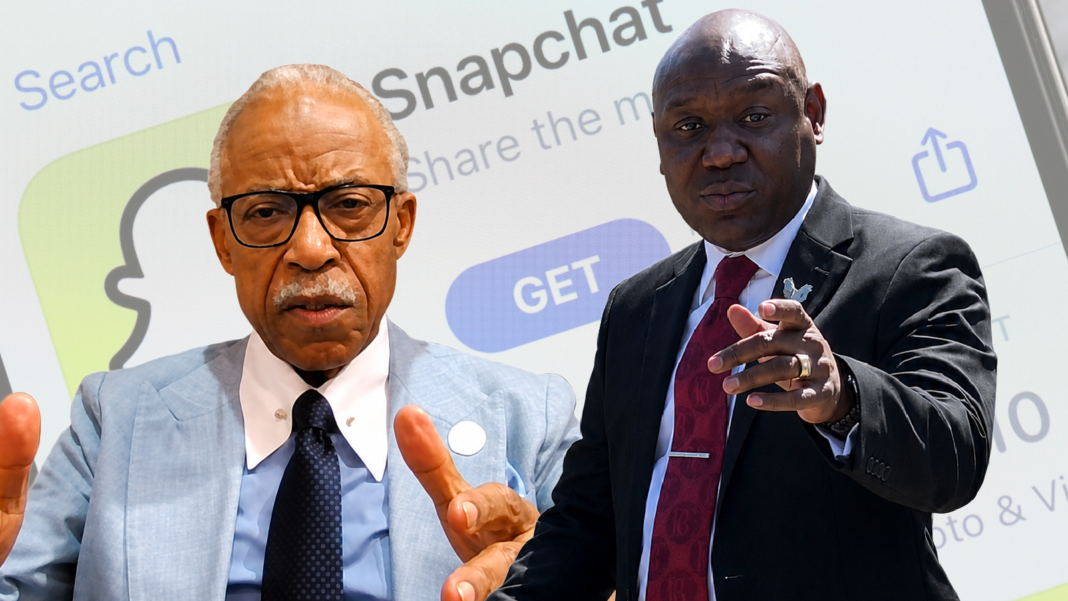
Within a matter of days, the media stood by silently as a mother’s observation about a lack of Snapchat stories was systematically morphed by Crump, Al Sharpton, and others into a definitive, global accusation that the teenager’s entire cell phone had been criminally “erased.”
The Mutation of a Narrative
To map the exact mechanics of how a digital mirage is manufactured, one only has to look at the raw timeline of public statements from early July 2026.
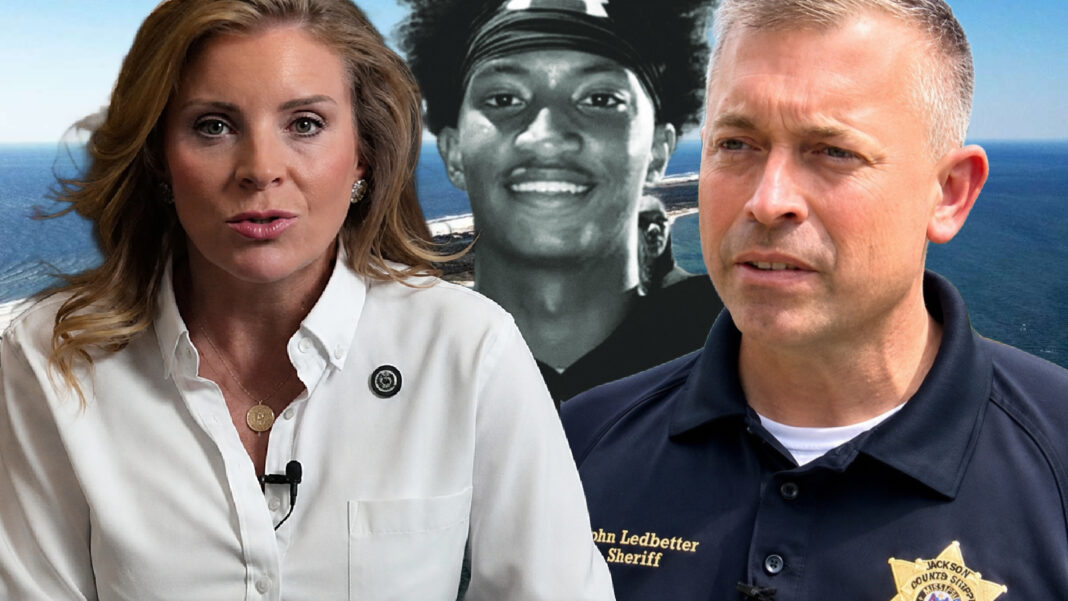
The baseline of the entire cell phone theory began on July 10, when Nolan’s mother, Christine Wonsley, spoke to Good Morning America. Her concern was personal, straightforward, and rooted in a parent’s knowledge of her teenage son’s routine digital habits. She noted that Nolan was a heavy user of Snapchat, yet when the family received his phone back from his friends, there were no new stories or saved media from their July 4th trip to Horn Island.
“It wasn’t even 24 hours, which is how long videos and pictures stay in Snapchat, and I was just like, that can’t be,” Wonsley stated, adding, “There was absolutely nothing… even my sister was like… ‘that’s suspicious.’”
But on that exact same day, Crump’s legal team stepped to the microphones to formally “translate” that maternal worry into a sinister criminal act. In a July 10 report by NewsNation, family attorneys expanded the claim to state that when the handset was returned, “some texts and Snapchat messages appeared to have been deleted.”
The word “texts” was casually added into the public record. The mother had exclusively observed no new Snapchat stories. Rather than asking if the attorneys possessed actual carrier data logs to backup the new deleted text message narrative, mainstream reporters simply ran the headline.
The narrative reached its point of absolute escalation just four days later. On July 14, during a filmed interview with TMZ, the Reverend Al Sharpton stood before a global camera and stripped away the final remnants of caution. Sharpton did not say the family suspected data manipulation, nor did he reference a single social media application. He issued a sweeping statement of forensic fact: “All of his photos, text messages, everything on the phone had been erased.”
No Media Pushback
The journalism here did not simply fail; it inverted itself. When Sharpton broadcasted that explosive accusation to millions of viewers, the physical cell phone had never been turned over to law enforcement or an independent digital lab. The device was still entirely in the custody of the family and their attorneys.
Yet, national news anchors did not press Crump or Sharpton on the obvious logical paradox: How can you publicly declare everything on a device has been manually erased if no certified digital forensic examiner has plugged the phone into a computer?
Instead, the press swallowed the “wiped clean” story whole. By treating an unverified, highly inflammatory legal theory as an established investigative benchmark, the media allowed a completely unverified storyline to take root — one where local teenagers had actively targeted and destroyed evidence to cover up a murder.
The total lack of media skepticism repeated itself when the legal team introduced their primary piece of “hostile evidence” to establish pre-death foul play. On July 10, family attorneys told national outlets they possessed a definitive video recording of a beach confrontation, wherein Nolan Wells could be heard aggressively screaming at his friends.
Ben Crump even leaned into the viral clip at a Friday afternoon press conference, explicitly telling reporters: “This video, you can hear an argument going where Nolan is saying, ‘Give me my freaking phone, what are you freaking doing?’” Media outlets ran with the explosive accusation immediately.
However, the high-stakes narrative collapsed within 48 hours when the actual person in the video came forward.
Tracestin Shepherd, a friend who was on the island trip with Wells, went on the record to identify himself as the person in the footage. Shepherd explicitly clarified that Wells was not even in the frame, stating: “That’s me yelling in that video.”
Yet, instead of holding Crump’s team accountable for misidentifying a voice and weaponizing a false recording to indict local teenagers in the court of public opinion, the mainstream media circle simply looked the other way.
There were no tough follow-up interviews or prominent retractions. The press passively allowed Crump’s team to silently drop the debunked tape and pivot to the next headline without ever forcing them to acknowledge they were wrong.
The Pascagoula Pivot
The ultimate proof of this uncritical media compliance arrived mid-month at a press courthouse press conference in Pascagoula. Standing outside the Jackson County Courthouse following a meeting with District Attorney Angel Myers McIlrath, Ben Crump quietly changed the entire trajectory of the phone storyline.
Rather than addressing why he and Sharpton had told the world the phone was already “erased,” Crump announced that his team had negotiated mutual terms with DA McIlrath. The deal outlined an upcoming “joint inspection” where digital experts from both the state, the family, and potentially the FBI would extract the phone’s data simultaneously.
A rigorous press corps would have seized on the immense contradiction: If the phone’s extraction terms were just now being negotiated, then the “all of his photos, text messages, everything on the phone had been erased” claim was a complete fabrication.
Furthermore, as weeks have passed, Crump’s team has remained tight-lipped regarding whether that joint extraction has actually taken place or what it truly revealed.
The media, true to form, asked nothing.
They did not point out that Horn Island is a primitive, uninhabited barrier island with zero cell towers and spotty service. The blindingly obvious reality — that a teenager’s phone would completely lack real-time digital footprints due to having little to no cellular reception — was completely buried in favor of a lucrative national conspiracy narrative.
Real World Collateral Damage
This total abdication of journalistic duty is not a victimless game. When a national audience is told by trusted civil rights icons and uncritical network news anchors that a massive, racialized digital cover-up is actively occurring, it creates an environment of righteous, dangerous fury.
Because the mainstream media refused to act as a barrier against unverified claims, online social media sleuths took it upon themselves to enforce “justice” against a fabricated digital mirage. Local families and teenagers have faced vicious doxing, relentless harassment, and explicit threats of violence based entirely on a timeline of “wiped data” that was never verified by a crime lab.
The escalation grew so volatile that the FBI ultimately had to intervene, arresting a California man for making interstate death threats against a Jackson County judge tied to the case.
This is the toxic lifecycle of the modern “Crump Effect,” and the mainstream media is its primary engine.
Journalism serves an essential purpose during emotionally charged investigations. It’s meant test the loudest narratives, not simply amplify them. That means asking uncomfortable questions of every side, verifying claims before repeating them, and correcting the record when facts change.
When that process breaks down, speculation can quickly become accepted truth, with consequences that extend far beyond television ratings or social media engagement.