The following complaint is part of GC Wire’s Operation Accountability, a series of reports examining allegations of misconduct involving public officials and others entrusted with serving the public. Each complaint will be supported by documentary evidence and submitted to the appropriate Mississippi state agency for review. GC Wire will publish the complaints and report on their progress and any actions taken by the agencies involved. If you would like to contribute to our efforts, please do so here. We can’t do it without your help.
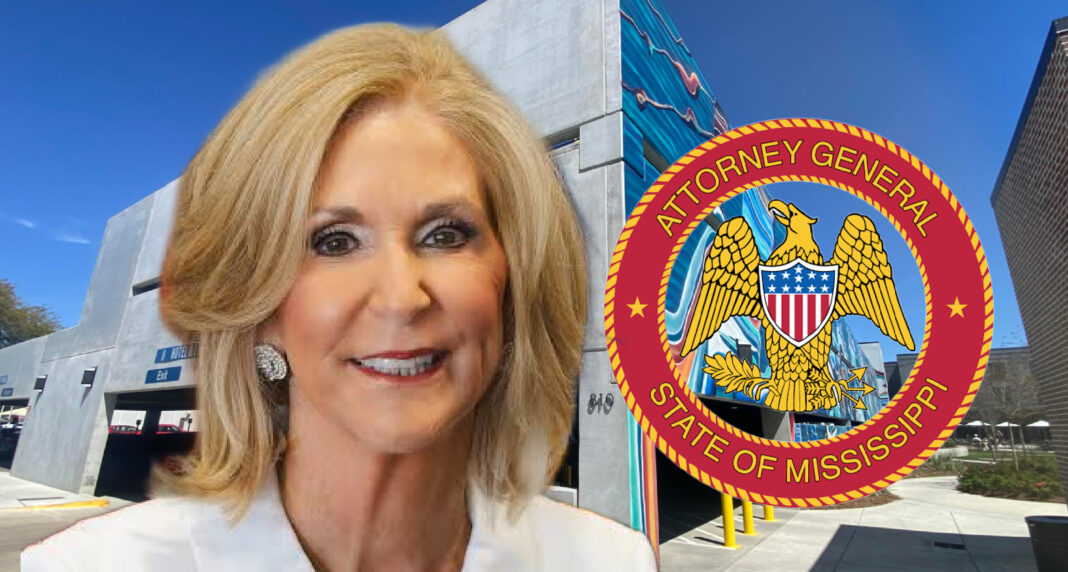
OCEAN SPRINGS, MS – GC Wire is submitting a formal criminal referral to Mississippi Attorney General Lynn Fitch and 19th Circuit District Attorney Angel Myers McIlrath requesting an investigation into suspected misconduct involving $8 million in state grants used to construct a privately owned parking garage in Ocean Springs.
The 19-page complaint is the culmination of a yearlong investigation conducted with the assistance of several local attorneys, whistleblowers, and volunteers who helped uncover and examine public records, contracts, government correspondence, and other evidence.
The complaint identifies seven areas of suspected wrongdoing involving current and former city officials, private developers, altered municipal records, agreements executed without documented Board approval, and potentially false representations made to state grant-makers.
GC Wire is publishing the complete criminal referral below so readers can examine the allegations and supporting evidence for themselves.
DATE: November 9, 2026
SUBJECT: Criminal Referral Regarding Suspected Forgery of Public Instruments, Suspected Alteration of Official Municipal Minutes, Suspected False Certifications to a State Agency, and Suspected Unauthorized Attestation Related to the $8,000,000 Gulf Coast Restoration Fund (“GCRF”) Project at 1515 Government Street, Ocean Springs, Mississippi (GCRF-20-09 & GCRF-21-09)
INTRODUCTION
This referral presents seven distinct areas of suspected misconduct involving the City of Ocean Springs, private developers, and approximately $8 million in Mississippi Gulf Coast Restoration Fund grants used to construct a privately owned parking garage.
The allegations are supported by public records, executed agreements, government correspondence, recorded public meetings, and other documentary evidence.
The seven counts address the following:
- Suspected falsification of municipal records: The substitution of 2023 amended agreements into the May 17, 2022, meeting records.
- Suspected false certifications of Board approval: Former Mayor Kenny Holloway and former City Clerk Patty Gaston’s execution of amended agreements without documented Board authorization, including an additional 2024 amendment.
- Suspected false representations to obtain state funding: Discrepancies between the grant applications’ representations and the completed project, particularly the failure to transfer ownership of the parking garage to the City.
- Mayor Holloway’s relationship with the developers: His residence in a developer-associated property and its subsequent transfer into a trust bearing his name.
- Joe Cloyd’s dual attestations: His signatures attesting grant agreements for both the City and the private developer, alongside his lobbying activities and confidential Securix arrangement.
- The altered Memorandum of Understanding: The insertion of an additional insurance obligation into an executed agreement subsequently presented to aldermen with a proposed lease.
- Refusal to correct altered municipal records: The Board’s 5–2 vote against restoring the original agreements after being presented with evidence of the discrepancies, including subsequent public statements acknowledging misappropriated documents and concerns about the cost of an investigation.
I respectfully request a criminal investigation into these matters, including the actions of current and former public officials, private individuals, and any other parties who may have participated in the alleged misconduct.
The following counts detail the evidence supporting this referral and identify matters requiring further investigation.
COUNT ONE — SUSPECTED FALSIFICATION OF OFFICIAL MUNICIPAL RECORDS
Suspected violations: Miss. Code Ann. §§ 97-11-1 and 97-9-3, as applicable.
What Happened?
On May 17, 2022, the Ocean Springs Board of Aldermen approved a set of two grant agreements (GCRF-20-09 and GCRF-21-09) between the City and Mississippi Development Authority (MDA). These agreements solidified an $8 million Gulf Coast Restoration Fund (GCRF) grant allocated for the construction of a parking garage.
At some point after that, somebody altered the official minutes of the May 17, 2022 meeting and swapped out the Board approved agreements with amended versions that were never presented to the Board of Aldermen, yet subsequently executed by former Mayor Kenny Holloway and attested by former City Clerk Patty Gaston.
How do We Know?
We know this to be true because a recent public records request for the official minutes packet of the Board meeting that occurred on May 17, 2022 produced amended versions of the two GCRF grant agreements that had creation and execution dates in 2023.
In addition to the impossible dates listed on the supposed 2022 agreements, the swapped out agreements also contained language citing legislation that was not created, not passed by the legislature and not signed by the governor until 2023.
The swapped out agreements reference Mississippi Senate Bill 3047 and the amount of money appropriated by the bill. These references appear on Pages 191–192 and Pages 211–212 of the 230-page PDF emailed by the Clerk on May 11, 2026.
This 2023 Senate Session bill did not exist on May 17, 2022, yet the City continues to tell the public those are the exact agreements approved by the Board of Aldermen on May 17, 2022.
The timeline is impossible. The documentary evidence establishes that agreements created after the original Board vote were substituted into the historical record.
This was brought to the attention of the city in 2026. Despite the impossible timeline, City Clerk Christine Millard publicly stated the 2023 amended agreements currently in that 2022 minutes packet are the correct agreements and that they simply were not executed until 2023.
Her statement is impossible to reconcile, because a previous public records request in November 2025 produced the actual original agreements approved by the Board on May 17, 2022 and fully executed in August 2022.
Now, the minutes packet includes executed amended versions of the agreements that were not authorized by the Board. One of the agreements now appearing in the May 17, 2022 minutes packet is a “Frankenstein” version, having the cover page of the original approved 2022 agreement and the substantive pages of an amended 2023 agreement.
It is important to note the original agreements approved by the Board of Aldermen did not reference certain Annexes. Specifically, the original approved agreements did not make reference to an MOU contemplating the private company retaining ownership of the garage and the city signing a long term lease. And the original approved agreements did not reference an Annex that would pay attorney Erich Nichols $800,000 of the $8 million grant. The later, unapproved versions did reference those Annexes.
Why Criminal Investigation is Warranted
The central question is not whether the records were altered. The documents themselves establish that later-created agreements were inserted into the record of an earlier meeting. The question is who altered the official record to remove the original approved agreements with amended versions that are materially different than the ones actually approved by the Board of Aldermen.
Investigators should determine who inserted the unapproved agreements into the official minutes, when the substitution occurred.
Investigators should also examine the actions of city officials who were subsequently presented with evidence of the falsification but voted to preserve the altered official record, including whether any individuals knowingly participated in concealing or perpetuating the falsification.
If the evidence establishes intentional falsification of official municipal records and/or the cover up of such actions, the responsible individuals should be prosecuted.
COUNT TWO — SUSPECTED FALSE CERTIFICATIONS OF BOARD APPROVAL TO A STATE AGENCY
Suspected violations: Miss. Code Ann. § 97-7-10 — Fraudulent Statements and Representations.
What Happened?
In 2023, former Ocean Springs Mayor Kenny Holloway signed amended versions of two Gulf Coast Restoration Fund grant agreements (GCRF-20-09 and GCRF-21-09) with the Mississippi Development Authority (MDA). Former City Clerk Patty Gaston attested to the agreements.
These were not the same agreements the Board of Aldermen had approved on May 17, 2022. They were subsequently created, amended agreements containing different provisions.
Yet the amended agreements certified that the individuals executing them possessed the necessary municipal authority to bind the City of Ocean Springs.
An exhaustive review of archived meeting records and responses to official public records requests has identified no vote by the Board of Aldermen approving those amended agreements. No documented Board authorization has been located, nor has any record been identified showing that the amended agreements were presented to Board members for review.
Holloway and Gaston were the city’s mayor and clerk. Their official responsibilities placed them in positions to know which agreements had been approved by the Board and which had not.
How Do We Know?
The original grant agreements were approved by the Board of Aldermen on May 17, 2022, and subsequently executed in August 2022.
The amended agreements now contained in that minutes packet were created and executed in 2023. They contained different provisions and referenced legislation enacted after the original Board vote.
A thorough review of the city’s official meeting records has identified no vote authorizing Holloway to execute the amended agreements. Subsequent public records requests also resulted in no such authorizations being presented.
Nevertheless, Holloway signed the amended agreements on behalf of the City, and Gaston attested to their execution. The agreements represented that the individuals executing them possessed the necessary municipal authority, despite the absence of any documented Board approval identified in the records reviewed.
As detailed in Count One, copies of these subsequently executed agreements also currently appear in the official minutes of the May 17, 2022 meeting, creating the appearance that they had received Board approval more than a year before the agreements actually existed.
The unauthorized set of amended GCRF grant agreements not only now appear in the minutes packet, but they were also presented to the Mississippi Development Authority as legitimate city approved agreements.
In addition to the two unauthorized 2023 agreements appearing in the 2022 minutes packet, another amended agreement was also executed in 2024 by Holloway and Gaston. As with the two 2023 amendments, no record has been identified establishing that the Board of Aldermen reviewed or approved the 2024 agreement. Nevertheless, Holloway executed it on behalf of the City, and Gaston attested to its execution. The executed 2024 version does not appear in any Board of Aldermen minutes packets.
Why Criminal Investigation Is Warranted
Mississippi Code § 97-7-10 prohibits knowingly and willfully making materially false statements or using documents containing fraudulent representations with intent to defraud a state agency.
The statute provides for imprisonment of up to five years if an individual is found guilty.
Investigators should review the complete MDA grant files, correspondence concerning execution of the amendments, communications between Holloway, Gaston, the city attorneys, and the developer, and any documents submitted to MDA as proof of municipal authorization.
Investigators should also determine whether the false appearance of Board approval created by the altered minutes described in Count One was intended to support or conceal the unauthorized execution of these agreements.
If the evidence establishes that any officials made or used materially false representations of municipal authorization with intent to defraud MDA into believing they were authorized to execute agreements, the responsible individuals should be prosecuted.
COUNT THREE — SUSPECTED FALSE REPRESENTATIONS TO OBTAIN AND RETAIN STATE GRANT FUNDS
Suspected violations:
- Miss. Code Ann. § 97-7-10 — Fraudulent Statements and Representations (felony; up to 5 years imprisonment).
- Miss. Code Ann. § 97-19-39(2) — Obtaining Money or a Thing of Value by False Pretenses (felony; up to 10 years imprisonment).
What Happened?
Page 3 of the GCRF grant application submitted in 2019 and again in 2020 to MDA for the $8 million parking garage included the following verbiage:
“OHOS Land, LLC has entered into an agreement in which it will transfer ownership of the parking garage and amenities to the City upon completing construction.”
That same City ownership claim was repeated on page 9, stating: “The City is a co-applicant and will be the owner of the proposed parking garage.”
It is important to note that every version of the grant agreements executed by the city, both Board approved and the not approved version, contain a clause that states:
“The Entity certifies that all of the material information contained in the Application is true and correct as of the date of the Application and the date of this Agreement.”
Yet the City’s subsequent records responses have failed to substantiate the representation that an ownership-transfer agreement already existed when the applications were submitted. The completed garage remains privately owned, raising serious questions about the accuracy of the original representations and the subsequent contractual certifications made to MDA.
How Do We Know?
On November 6, 2025, I submitted a public records request for the agreement referenced in the above statement.
The City Clerk Christine Millard’s office responded on November 18, 2025. In response to that very specific request, the clerk provided a 2021 non-binding MOU that discussed the possibility of a future lease.
I responded explaining that document was not responsive to my request. Not only did it not contain an agreement to transfer ownership of the garage to the City upon completing construction, it was also created and executed two years after the 2019 grant application – that contained the promise an agreement existed – was submitted.
On March 18, 2026, I again requested the ownership-transfer agreement, specifically pointing out that the document provided by the City could not possibly have been the agreement represented as already existing in the 2019 grant application.
I expressly asked the City to state whether such an agreement existed.
The following day, the City Clerk’s Office responded:
“The August 2021 document is the agreement regarding the parking garage lease as recorded in the minutes.”
Once again, the City avoided addressing the actual request. I had requested an agreement transferring ownership of the parking garage, not an agreement concerning a potential lease – that was created years after the application stated an ownership agreement existed.
On March 25, 2026, I sent another follow-up, expressly demanding that the City either produce the requested agreement, acknowledge that no responsive records existed, or identify the legal exemption under which the agreement was being withheld.
On March 30, 2026, the City Clerk’s Office responded that it had produced all documents it could locate, and:
“No additional responsive records can be located in the City’s possession, custody or control regarding your request.”
Despite multiple requests and repeated explanations of the discrepancy, the City never produced an agreement transferring ownership of the parking garage or identified any such agreement existing when the grant application was submitted.
The significance of this discrepancy extends well beyond an unfulfilled development promise. The grant application represented to MDA that an ownership-transfer agreement was already in place. The City’s subsequent records responses have failed to substantiate that representation, and the completed parking garage remains privately owned.
The representation concerning ownership was not the only material commitment made to MDA. The grant application also described several specific public benefits and development outcomes that were not delivered as proposed, including:
False Statements Made to Acquire $8 Million in GCRF Grant Money
In seeking millions of dollars in Gulf Coast Restoration Fund grants, the City of Ocean Springs and OHOS Development LLC made specific representations to MDA about the public facilities and amenities they would deliver if the state provided the requested funding. The state awarded the money, but several of those promised in exchange for the money were never delivered as represented to grant-makers in the applications.
The grant application represented that, if the state provided the requested money, the applicants would deliver the following:
- WHAT WAS PROMISED: Transfer ownership to the City
- WHAT WAS DELIVERED: This was never done, nor has the city been able to produce the agreement they told state grant-makers existed.
- WHAT WAS PROMISED: Create a four story structure with 305 public parking spaces
- WHAT WAS DELIVERED: A three story structure with only 156 public parking spaces.
- WHAT WAS PROMISED: A “large-scale video projection mapping and interactive immersive video display.” They stated it would be “mind boggling” and also wrote, “The experience of interacting with an artistic video display the size of an entire building really can’t be oversold.”
- WHAT WAS DELIVERED: Not delivered.
- WHAT WAS PROMISED: “The greenspace in front of the garage will serve as a public-use park.”
- WHAT WAS DELIVERED: Not delivered. While there is a greenspace, anyone wanting to use the space for a child’s party or get-together is directed to the hotel sales office to rent the area as event space.
The City of Ocean Springs and OHOS Development sought millions of dollars in state funding by making specific representations about what they would deliver in exchange for that money. The state awarded the funding, but the applicants failed to deliver several of the major promised public benefits.
Most significantly, the parking garage remains privately owned despite repeated representations that ownership would be transferred to the City.
Instead of receiving ownership of the publicly funded facility, taxpayers are now required to pay the private developer rent and maintenance fees. These are documented discrepancies between what the applicants represented to MDA to obtain public money and what they actually delivered.
The discrepancies between the grant application and the completed project were also raised by members of the Ocean Springs Board of Aldermen.
When aldermen were told by Mayor Bobby Cox the City needed to execute a lease for the privately owned parking garage or face the possibility of repaying $8 million in state grant funds, Aldermen Karen Stennis and Shannon Pfeiffer questioned why the City was being required to lease a facility that the grant application expressly represented the garage would become City property.
In response to questions about the representations made in the grant application, City Attorney David Harris characterized those representations as a “sales pitch.”
But the representations made in the grant applications were not merely a “sales pitch.” They were material statements submitted to a state agency in support of a request for millions of dollars in public funding.
More importantly, every version of the grant agreements executed by the City, including the original Board-approved agreements and the subsequently amended versions, contained the following express certification:
“The Entity certifies that all of the material information contained in the Application is true and correct as of the date of the Application and the date of this Agreement.”
The City therefore expressly certified that the material representations in its grant applications were accurate, both when the applications were submitted and when the agreements were executed.
That certification included the representation that an agreement to transfer ownership of the parking garage to the City already existed. Yet the City has been unable to produce such an agreement, and the garage remains privately owned.
Investigators should determine who knew these representations were inaccurate, whether the certifications were knowingly false when made, and whether MDA relied upon them in approving or disbursing the grant funds.
The Board of Aldermen was subsequently presented by Mayor Bobby Cox and City Attorney David Harris with a choice between leasing the privately owned facility and potentially becoming responsible for repayment of the state funding, despite the applicants’ earlier representations that the City would own the garage.
Investigators should establish who authorized the representations in the grant applications, whether those individuals knew the representations were false or misleading when made, and whether the subsequent certifications of their accuracy constituted fraud against the State of Mississippi.
COUNT FOUR — MAYOR KENNY HOLLOWAY’S RESIDENCE AND RELATIONSHIP WITH THE PARKING GARAGE DEVELOPERS
As detailed in Count Two, former Ocean Springs Mayor Kenny Holloway executed amended Gulf Coast Restoration Fund grant agreements that materially changed the terms of the $8 million parking garage project. Those agreements were never presented to or approved by the Board of Aldermen, yet Holloway signed documents representing that he possessed the authority to execute them on behalf of the City.
During the same period, Holloway was living in a residence owned by a company associated with individuals involved in the parking garage development.
The following timeline documents Holloway’s financial circumstances, including bankruptcy court records reporting a net worth of approximately $1,600, his housing arrangement with the developers, and the subsequent transfer of the residence into a trust bearing his name shortly after he left office. The property was subsequently listed for sale for nearly $1 million.
What Happened?
2021: Kenny Holloway took office as Mayor shortly after filing bankruptcy. Soon after taking office, he moved into a residence at 413 Ward Avenue. The property was owned by 413 Ward LLC, an entity managed by attorney Erich Nichols and Joe Cloyd. Holloway stated publicly his first order of business was to get the parking garage deal completed.
Nichols and Cloyd were also connected to the OHOS development project that received millions of dollars in Gulf Coast Restoration Fund grants through the City of Ocean Springs. Nichols served as the project attorney for OHOS and ultimately received $800,000 of the $8 million grant.
Mr. Cloyd’s complete involvement is unknown, but archives of city meetings on YouTube show former Alderman Ken Papania stating he was convinced to accept certain arrangements regarding the garage after speaking with Cloyd. Mr. Cloyd also signed the original Board approved grant agreements as Attester for OHOS.
2022–2025: Holloway continued residing at the property while serving as mayor. During his administration, the City executed agreements involving the publicly funded parking garage associated with the OHOS development.
June 12, 2025: A warranty deed transferred the property from 413 Ward LLC to 413 Ward Trust.
2025: A subsequent corrected deed identified the grantee as a trust bearing the name “John K. Holloway.” The deed records reviewed did not establish the amount, if any, paid by Holloway for the property.
February 2026: The property was advertised for sale for $978,000, with Holloway identified as the listing agent.
Bankruptcy court records placed Kenny Holloway’s net worth at approximately $1,600 just before taking office.
During his tenure as mayor, Holloway lived in a house owned by a company associated with developers who were receiving millions of dollars in state grant funding through the City of Ocean Springs. Shortly after Holloway left office, the property was transferred into a trust bearing his name.
Holloway left office July 1, 2025. By February 2026, the house was listed for sale for $978,000, with Holloway serving as the listing agent.
Mr. Holloway has ignored repeated media inquiries asking if he had paid for the house or if it was gifted to the trust bearing his name.
We request investigators to establish the consideration paid, if any, for Holloway’s occupancy and the subsequent transfer, and whether those arrangements were connected to his official actions.
COUNT FIVE — DEVELOPER JOE CLOYD’S ATTESTATION OF CITY GRANT AGREEMENTS
What Happened?
In August 2022, the City of Ocean Springs executed two Gulf Coast Restoration Fund grant agreements with the Mississippi Development Authority and OHOS Development, LLC, identified as GCRF-20-09 and GCRF-21-09.
Page 10 of each agreement contains three separate signature blocks: one for the Mississippi Development Authority, one for the City of Ocean Springs, and one for OHOS Development, LLC.
Mayor Kenny Holloway signed both agreements on behalf of the City of Ocean Springs.
But the individual who signed in the City’s designated “ATTEST” section was not the City Clerk or another identified municipal official. It was Joe Cloyd, an individual associated with the private development benefiting from the grant funding.
On both agreements, Cloyd also signed in the separate “ATTEST” section designated for OHOS Development, LLC.
In other words, the same individual attested for both the municipal government and the private developer on two separate state grant agreements involving millions of dollars in public funding.
Cloyd’s Other Roles
At the time these agreements were executed in August 2022, Cloyd was serving on the local school board and working as a lobbyist for the City of Ocean Springs.
Neither his school board position nor his lobbying relationship with the City inherently conferred authority to attest official municipal grant agreements.
The documents do not identify Cloyd as holding any municipal office. Instead, his handwritten name appears in the spaces designated for the attesting party’s title.
Cloyd’s involvement in private agreements connected to Ocean Springs municipal business extended beyond the parking garage project.
Around the same time period, Cloyd also signed a confidential agreement with Securix, the private traffic enforcement contractor involved in the City’s controversial ticketing program. That arrangement was to pay Cloyd $6 for every paid uninsured motorist traffic citation originating in Ocean Springs. The agreement explicitly restricted Cloyd from telling anyone he was engaged in the contract or had even ever spoken to the Securix company.
Thus, during the same year, Cloyd was serving on the school board, working as a lobbyist for the City, signing an agreement involving a private municipal contractor, and attesting both sides of two multimillion-dollar state grant agreements.
Matters Requiring Investigation
The signature pages of GCRF-20-09 and GCRF-21-09 establish that Cloyd served as the attesting witness for both the City of Ocean Springs and OHOS Development, LLC.
Investigators should determine:
- Who authorized Cloyd to attest the grant agreements on behalf of the City of Ocean Springs, and whether any written municipal authorization existed.
- Whether Cloyd possessed any legal authority to perform an official municipal attestation.
- Why the City Clerk or another authorized municipal official did not attest the agreements.
- Whether MDA was informed that the same individual was attesting the agreements for both the municipal government and the private developer.
- Whether Cloyd’s contractual relationships with the City, OHOS Development, and Securix created undisclosed financial interests or conflicts relevant to his participation in municipal business.
The central issue is why an individual associated with a private developer was permitted to attest official grant agreements on behalf of the City while simultaneously attesting those same agreements for the developer.
COUNT SIX — SUSPECTED FORGERY AND PRESENTATION OF AN ALTERED AGREEMENT TO THE BOARD OF ALDERMEN
Potential Criminal Violations:
- Miss. Code Ann. § 97-21-35 — Forgery
- Miss. Code Ann. § 97-21-59 — Uttering a forged instrument
- Miss. Code Ann. § 97-7-10 — Fraudulent statements and representations
What Happened?
On October 21, 2025, the Ocean Springs Board of Aldermen was presented with an altered version of an August 17, 2021, Memorandum of Understanding (MOU) concerning the City’s relationship with the private developers of the $8 million parking garage.
The document was provided as supporting information for a proposed lease agreement simultaneously presented to the Board.
The altered MOU contained language that did not appear in the original executed agreement, representing that the City was responsible for additional insurance expenses at taxpayer expense.
Although the language on Page 1 had been changed, the document retained the original Page 2 signature page, creating the appearance that the parties had executed and approved the revised terms.
The proposed lease agreement presented to aldermen incorporated the additional insurance obligation reflected in the altered MOU.
The Board tabled consideration of the lease, but not because its members knew the MOU had been altered. That discovery came later, when GC Wire’s investigative team identified the discrepancy and brought it to the City’s attention.
Only after the alteration was reported did City Attorney David Harris acknowledge it in a confidential memorandum distributed to Board members in November 2025.
The Alteration and Its Financial Consequences
The original MOU, executed August 17, 2021, established certain responsibilities of the City and the private developer concerning the parking garage project.
In the version presented to aldermen four years later, the words “insurance and” had been inserted into a provision addressing financial responsibilities.
Those words did not appear in the original agreement.
The change was material because it represented that the City had agreed to assume additional insurance expenses that were not part of the original executed terms.
No separately executed amendment authorizing the insertion has been identified in the records reviewed.
The altered document retained the original signatures, making it appear that the parties had agreed to the additional financial obligation when they executed the MOU in August 2021.
The financial significance was reinforced by the proposed lease presented at the same meeting, which incorporated the additional insurance obligation.
The City was therefore being asked to consider a lease containing financial terms supported by an altered document bearing the original signatures.
Discovery and Subsequent Acknowledgment by the City Attorney
Following the October 21, 2025 meeting, GC Wire’s investigative team compared the MOU presented to aldermen with the original executed document that appeared in official city minutes.
The comparison revealed the additional language on Page 1 and the retention of the original signature page. GC Wire brought the discrepancy to the City’s attention.
In November 2025, City Attorney David Harris distributed a confidential memorandum to members of the Board addressing the matter.
In that memorandum, Harris acknowledged that language had been added to the original agreement.
His acknowledgment is significant because it confirms that the document presented to the Board differed from the agreement originally executed by the parties.
Investigators should examine Harris’s memorandum, including any explanation concerning the origin of the alteration, who authorized it, and whether the original signatories approved the revised terms.
Potential Forgery and Presentation of a Forged Instrument
Miss. Code Ann. § 97-21-35 addresses the fraudulent alteration or falsification of instruments within its statutory scope.
Miss. Code Ann. § 97-21-59 addresses the knowing presentation of certain forged instruments as genuine, with intent to defraud.
The circumstances warrant examination under both provisions because the alteration of the document and its subsequent presentation to the Board are potentially separate acts.
The retention of the original signature page is relevant to whether the altered document was intended to appear authentic. The addition of an insurance obligation is relevant to whether the alteration was intended to impose an unauthorized financial responsibility on taxpayers.
Investigators should also examine whether the knowing use of the altered document implicates Miss. Code Ann. § 97-7-10.
Matters Requiring Criminal Investigation
Investigators should obtain the original August 17, 2021, MOU, the altered version presented on October 21, 2025, the proposed lease agreement, the complete meeting packet, and City Attorney David Harris’s confidential November 2025 memorandum.
Investigators should determine:
- Who altered the original MOU, when the alteration occurred, and whether the original signatories authorized the change.
- Who prepared and supplied the altered document for presentation to the Board, and whether those involved knew it contained unauthorized changes.
- Whether the altered MOU was deliberately used to justify additional insurance expenses in the proposed lease at taxpayer expense.
- What Harris knew about the alteration, when he learned of it, and what explanation he provided in his November memorandum.
- Whether any City official, employee, attorney, or representative of the private developer knowingly participated in creating, distributing, or presenting the altered document as genuine.
The evidence establishes that an altered version of an executed agreement, retaining its original signatures and adding a financial obligation for the City, was presented to elected officials as supporting documentation for a proposed lease containing that same obligation.
The Board tabled the lease without knowing of the alteration. GC Wire subsequently discovered the discrepancy, and the City Attorney acknowledged the altered language.
The remaining questions are who altered the document, who knew of the alteration, and whether it was knowingly presented as genuine to impose financial obligations on the City that the original agreement did not authorize.
COUNT SEVEN — KNOWING REFUSAL TO CORRECT ALTERED OFFICIAL MUNICIPAL RECORDS
Potential Statutory Violations:
- Miss. Code Ann. § 25-41-11 — Requirements governing the recording and maintenance of official minutes under the Mississippi Open Meetings Act.
- Miss. Code Ann. §§ 97-11-1 and 97-9-3 — Potential criminal violations requiring examination in connection with the alleged falsification and continued preservation of altered official records.
What Happened?
On May 5, 2026, the Ocean Springs Board of Aldermen was presented with documentary evidence that its official minutes from May 17, 2022, contained materially altered grant agreements involving $8 million in state funding for the downtown parking garage.
Despite evidence that the agreements currently appearing in the official record were created more than a year after the Board originally approved the project documents, five aldermen voted against a motion to restore the original agreements to the historical record.
Two of those aldermen, Kevin Wade and Rob Blackman, had participated in the May 17, 2022, vote approving the original agreements. Blackman had also seconded the original motion authorizing the mayor to execute the grant documents.
Another alderman, Steve Tillis, had personally reviewed the evidence before the May 5 meeting.
Following the vote, Tillis publicly acknowledged on Facebook that documents had been misappropriated and explained that correcting the records could trigger an investigation costing taxpayers more than $100,000.
The circumstances warrant investigation into whether City officials, after being presented with evidence that the historical record contained agreements never approved by the Board, knowingly permitted those records to remain unchanged for the purpose of concealing unauthorized actions involving millions of dollars in public funding.
Alderman Karen Stennis Presents Evidence of Altered Records
During the May 5, 2026, meeting, Alderman Karen Stennis delivered a presentation documenting discrepancies between the grant agreements approved by the Board on May 17, 2022, and the agreements subsequently appearing in the official minutes.
Stennis explained that the Board had approved two specific Gulf Coast Restoration Fund agreements with the Mississippi Development Authority, identified as GCRF-20-09 and GCRF-21-09.
The minutes of that meeting were subsequently approved in June 2022, and the original agreements were executed in August 2022.
However, the documents currently attached to those minutes contain provisions from materially different amended agreements created in 2023, including references to legislation that did not exist when the Board voted in May 2022.
Stennis presented the timeline and documentary discrepancies to demonstrate that the current official record no longer accurately reflected the agreements approved by the elected governing body.
Her proposed correction was not intended to change the Board’s 2022 actions. It was intended to restore the documents reflecting what that Board had actually approved.
Stennis moved to correct the minutes, and Alderman Shannon Pfeiffer seconded the motion.
The motion failed by a vote of 5–2.
Voting to correct the records:
- Karen Stennis
- Shannon Pfeiffer
Voting against correcting the records:
- Steve Tillis
- Kevin Wade
- Rob Blackman
- Julie Messenger
- Matthew Hinton
As a result, the disputed amended agreements remained in the City’s official historical record.
Kevin Wade and Rob Blackman Had Approved the Original Agreements
The votes of Aldermen Kevin Wade and Rob Blackman are particularly significant because both were members of the Board that approved the original grant agreements on May 17, 2022.
Blackman also seconded the original motion authorizing the mayor to execute the MDA grant documents.
Both men therefore participated in the original authorization process.
Four years later, when presented with evidence that the official record contained materially different agreements created after their original vote, both voted against restoring the original documents they had personally authorized years earlier.
Investigators should determine why two aldermen who participated in approving the original agreements opposed correcting the official record after being presented with evidence that those agreements had been replaced.
Their participation in both votes is relevant to establishing what they knew about the original authorization and whether they understood the discrepancies presented by Stennis.
Steve Tillis Reviewed the Evidence Before Voting Against Correction
Before the May 5 meeting, Alderman Steve Tillis participated in an approximately hour-long private meeting during which he was shown the original 2022 agreements, the subsequently amended versions, and side-by-side comparisons demonstrating the discrepancies.
The documents were reviewed individually, along with the timeline establishing that the amended agreements could not have existed when the Board voted in May 2022.
Following that meeting, Tillis sent a text message stating:
“I heard what you had to say loud and clear.”
Nevertheless, during Stennis’s presentation at the May 5 Board meeting, Tillis interrupted and asked:
“My head is spinning. Are we talking about the 1515 parking garage?”
Tillis subsequently voted against correcting the records.
His prior review of the documents and subsequent written acknowledgment are relevant to determining whether he understood the evidence before casting his vote.
Tillis Publicly Acknowledges Misappropriated Documents and Explains His Vote
After the May 5 vote, GC Wire requested explanations from aldermen who had opposed the correction.
Tillis responded and subsequently made additional public statements on Facebook.
In explaining his vote, Tillis wrote:
“This could have involved hiring outside counsel and investigators, with the investigation potentially extending from Ocean Springs to the state level.”
He further stated:
“In addition, a full investigation could potentially cost taxpayers upward of $100,000.”
Tillis also acknowledged the underlying documentary controversy in a May 10 Facebook comment:
“I would agree that there has been much misappropriated documents.”
He added that the situation had arisen under a different administration and that current aldermen were making decisions with the circumstances they inherited.
These statements are significant because Tillis acknowledged problems involving the City’s documents while identifying the possibility of an extensive investigation as a reason for opposing the correction.
The issue before the Board was whether the official minutes accurately reflected what had been approved in 2022. The potential cost of investigating how those records became altered was a separate question.
Tillis’s statements raise a legitimate investigative concern: whether the desire to avoid an investigation influenced the decision to leave disputed official records unchanged.
The statements do not, standing alone, establish that Tillis personally altered the records or participated in their original falsification. They do provide evidence relevant to his knowledge of the controversy and his stated reasons for voting against corrective action.
City Attorney David Harris Opposes Correction as a Collateral Attack on the Previous Board
During the May 5 meeting, City Attorney David Harris raised legal objections to correcting the minutes, characterizing the proposed action as a potential collateral attack on the actions of a previous Board of Aldermen.
Stennis clarified that she was not seeking to reverse, reconsider, or invalidate anything the previous Board had approved.
Rather, she wanted the official minutes to accurately reflect the documents the Board had actually voted to approve on May 17, 2022.
The distinction was fundamental: Stennis was asking the Board to correct an allegedly falsified historical record, not to change the decisions of its predecessors.
Harris also stated that he had researched the issue and found no statutory authorization permitting the Board to correct the minutes of a previous Board.
Alderman Shannon Pfeiffer interrupted and pointed out that Harris had likewise identified no law prohibiting such a correction.
The exchange raises questions about the legal basis for the advice provided to aldermen.
Harris’s position treated the proposed correction as a potential challenge to the previous Board’s actions, despite Stennis’s explanation that the documents currently appearing in the minutes were not the documents that Board had approved.
The disputed agreements contained references to legislation enacted in 2023. They could not have been among the agreements approved by the Board in May 2022.
Nevertheless, Harris’s objections were raised in opposition to a motion intended to restore the original agreements to the historical record.
Following the meeting, Tillis relied on the City Attorney’s advice to explain his vote against correction.
In a public Facebook comment, Tillis stated:
“If the sitting city attorney tells us we cannot change the minutes of a previous board,” Tillis added, “Then I have to listen to legal representation.”
Investigators should examine whether Harris’s legal advice accurately addressed the specific correction Stennis proposed, or instead conflated the correction of an inaccurate historical record with an attempt to overturn a previous Board’s lawful actions.
They should also determine whether Harris or other City officials knew how the amended agreements came to replace the original documents and whether that information was disclosed to aldermen before the vote.
Mayor Bobby Cox Acknowledges the Documents Were Inserted for a Reason
Mayor Bobby Cox also publicly addressed allegations that later agreements had been placed into the historical record.
In defending the City’s handling of the disputed documents, Cox stated:
“It wasn’t being hidden and stuffed in there. It was done for a reason.”
This statement warrants further investigation.
The documents at issue contain provisions that could not have existed when the Board approved the original agreements in May 2022.
If the subsequent insertion of those agreements into the historical record was intentional, investigators should determine who authorized it, what purpose it served, and whether the objective was to create the appearance of Board approval for agreements that had never been approved.
Cox’s statement should be examined in the context of the complete meeting recording and the documentary evidence described in Counts One and Two.
Why Criminal Investigation Is Warranted
Mississippi law requires municipalities to maintain official minutes documenting the actions of their governing bodies.
The accuracy of those records is particularly important because municipal authority is established through actions recorded in the minutes.
The May 5, 2026, vote occurred after evidence had been presented that the official record contained agreements created after the original approval date.
The circumstances involve several distinct issues requiring investigation:
- Whether the original substitution of the agreements constituted intentional falsification of municipal records.
- Whether any officials knew who made the substitution or why it occurred.
- Whether the subsequent refusal to correct the record was intended to conceal unauthorized agreements or prevent scrutiny of their execution.
- Whether legal advice given to aldermen improperly characterized the correction of inaccurate records as an attempt to overturn the actions of a previous Board.
- Whether the continued use of the altered record resulted in false representations to MDA concerning the City’s approval of the amended agreements.
The refusal to correct disputed minutes is not, by itself, proof of criminal participation in their original alteration. However, the documented notice provided to officials, the voting history of Wade and Blackman, Harris’s objections, and Tillis’s subsequent statements provide grounds to investigate whether any officials knowingly participated in concealing or perpetuating the alleged falsification.
Matters Requiring Criminal Investigation
Investigators should obtain the complete May 5, 2026, Board meeting recording and minutes, the documents presented by Alderman Karen Stennis, the original and amended GCRF agreements, and the City’s official May 17, 2022, minutes packet.
Investigators should also obtain the relevant Facebook comments, correspondence with aldermen, and any written legal opinions or communications concerning the proposed correction.
Investigators should determine:
- Whether all five aldermen who voted against correcting the minutes had reviewed or understood the documentary evidence presented by Stennis.
- Why Kevin Wade and Rob Blackman, who voted to approve the original agreements in 2022, subsequently opposed restoring those agreements to the official record.
- Whether Tillis’s statements concerning misappropriated documents and the cost of a possible investigation reflected a desire to avoid scrutiny of the underlying alterations.
- What legal authority Harris relied upon in characterizing the proposed correction as a collateral attack on a previous Board, and whether he distinguished correcting the historical record from overturning an earlier municipal action.
- Whether Harris or other City officials knew who substituted the amended agreements into the historical record and whether that information was disclosed to the Board.
- What Mayor Bobby Cox meant when he stated that the disputed documents had been placed into the record for a reason, and whether he knew who authorized their inclusion.
- Whether any City official knowingly used or preserved the altered records to misrepresent which agreements had been approved by the Board or to conceal unauthorized contractual obligations.
The evidence establishes that the Ocean Springs Board of Aldermen was formally presented with discrepancies involving altered official records, that five aldermen voted against restoring the original agreements, and that one of those aldermen subsequently acknowledged misappropriated documents while citing the possibility of an expensive legal investigation as a reason for his vote.
The central question is whether the refusal to correct the record was merely a disputed legal or procedural decision, or whether any officials knowingly acted to conceal the unauthorized substitution of agreements involving $8 million in public funding.