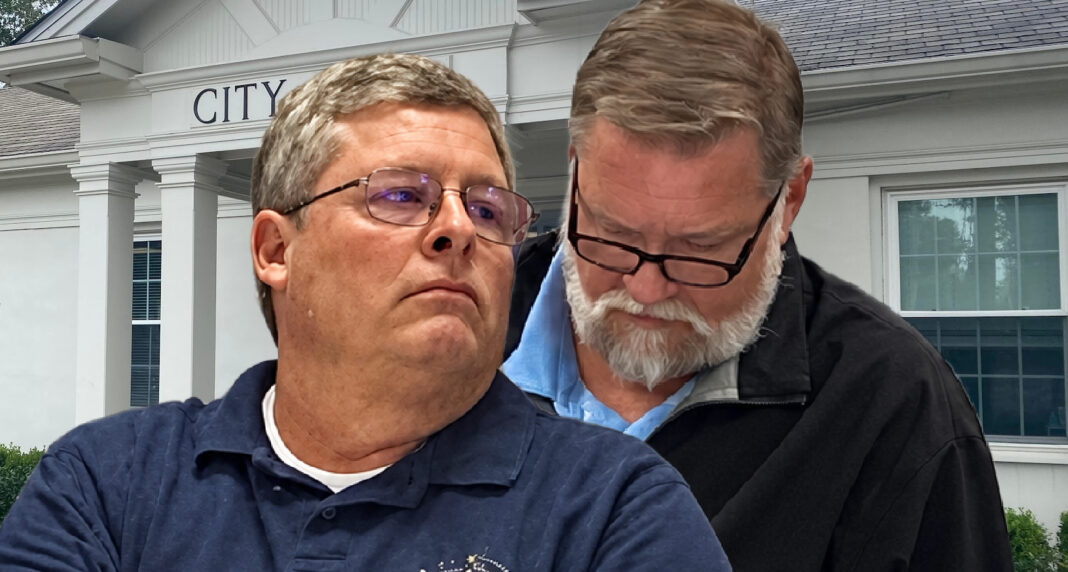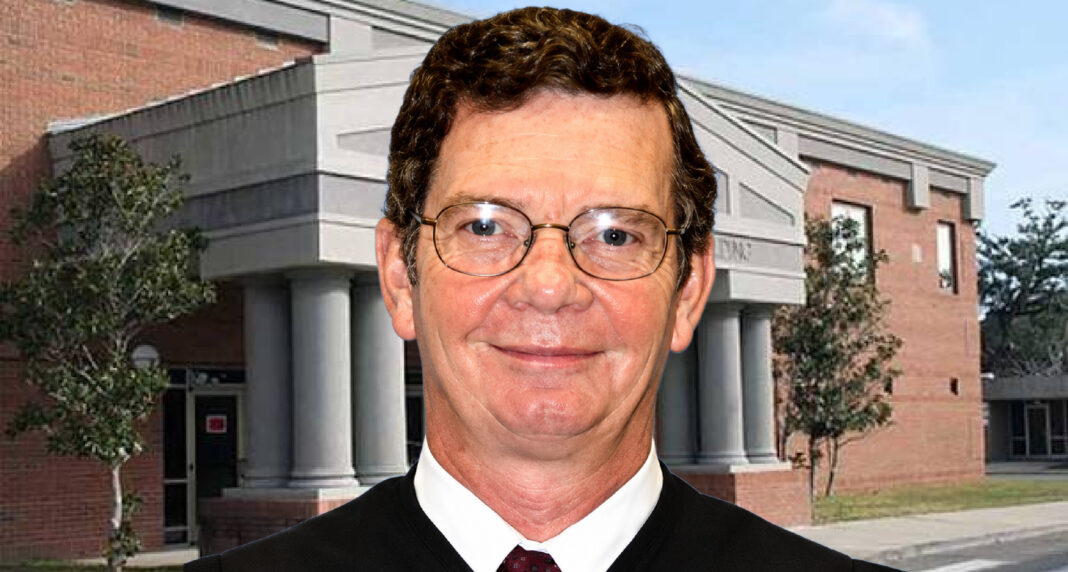
JACKSON COUNTY, MS (GC Wire) – Supreme Court discipline, the Securix scandal, disputed contempt rulings and a pending sexual-harassment lawsuit follow a longtime Chancery Court judge into Tuesday’s election.
“In this judicial-misconduct case, Chancellor D. Neil Harris abused his contempt powers, failed to recuse himself from contempt proceedings, and prevented those he charged with contempt from presenting any defense.”
Those were not the words of a political opponent or disgruntled litigant.
They were the words of the Mississippi Supreme Court in a ruling against Jackson County’s Judge D. Neil Harris.
The state’s highest court found Harris had violated six canons of judicial conduct and engaged in willful misconduct in office.
More than a decade later, Harris is again under scrutiny for exercising his contempt powers in a case involving some of Mississippi’s most politically connected figures.
He also faces a pending sexual harassment lawsuit filed by a Jackson County attorney who is now challenging him in Tuesday’s election.
POLITICAL CONNECTIONS AND FAMILY TIES
Harris presided over the secretive lawsuit involving Securix, the company whose software was used to nab Mississippi motorists operating without insurance.
On one side of the lawsuit were Robert Wilkinson, who had served as Ocean Springs city attorney for approximately 20 years, and powerful political consultants Josh Gregory and Quinton Dickerson.
On the other was Jonathan Miller, an approximately 80-year-old Georgia businessman whose software company had become entangled in Mississippi’s controversial uninsured-motorist enforcement program.
Wilkinson, Gregory and Dickerson were principals of QJR LLC, which sued Miller and his company in Harris’s chancery court, asking Harris to dissolve a partnership corporation half owned by QJR and half owned by Securix LLC. That company, Securix Mississippi LLC, contracted with multiple municipalities to handle insurance related traffic citations.
The dispute unfolded as GC Wire and other media outlets scrutinized their operations in municipalities throughout Mississippi, including $300 citations, bypassing municipal courts, reports of fake court hearings held in government building lobbies, and questions about the handling of public money.
During the litigation, Wilkinson resigned as Ocean Springs city attorney amid mounting media scrutiny.
His replacement, appointed in June 2025?
David Harris Jr., the judge’s son.
Meanwhile, the dispute involving Wilkinson and his politically connected business partners remained before the elder Harris.
ONE GAG ORDER, DIFFERENT CONSEQUENCES
In September 2024, Harris sealed the entire Securix case and prohibited the parties from discussing it publicly. The order was issued on the judge’s own motion, not at the request of either party.
Media outlets, including GC Wire, the Sun Herald, and Mississippi Today, made unsuccessful attempts to intervene and open the proceedings to public scrutiny.
In interviews and public comments, Jonathan Miller alleged that the Mississippi operators of his software bypassed municipal courts, conducted fake court hearings in lobbies, impersonated police officers, and maintained a “whitelist” to exempt certain individuals from citations.
Public records identified by GC Wire in various reports verified the bulk of those allegations.
The Securix Chairman began sharing information with state and federal investigators about the alleged misconduct. According to Miller, Harris subsequently ordered him from the bench to stop communicating with investigators, including the FBI.
Miller also spoke with reporters about Securix’s earlier dealings with Ocean Springs, which predated the existence of QJR and Securix Mississippi. According to sworn statements and published interviews, Miller refused to discuss the pending lawsuit because of the court’s gag order.
Harris nevertheless found Miller in contempt for communicating with the press and Ocean Springs officials.
The judge also acknowledged Miller’s assertion that Wilkinson had spoken with reporters, but declared there was no independent proof.
Yet published media reports had already quoted Wilkinson discussing the pending litigation.
After Miller and Securix unsuccessfully attempted to move the case to federal court, Harris ordered Miller to pay $63,603.80 in attorney fees within 24 hours. The award included expenses from the federal proceedings that the federal court had not awarded, despite QJR’s request.
In a separate judgment filed the same day, Harris directed Miller to report to jail the following afternoon and remain incarcerated until the entire amount was paid.
Miller was suffering from cancer and experiencing severe financial difficulties. Neither order contained a finding that he could afford the payment and no hearing to decide if he had the ability to pay was afforded.
When Securix later presented recordings of Wilkinson discussing the pending case with a journalist, Harris did not impose comparable contempt sanctions.
Yet published media reports quoted Wilkinson discussing the pending litigation. And in a July 9, 2025 court filing, QJR’s own attorney acknowledged that Wilkinson had responded to media inquiries about the sealed case.
Instead of finding Wilkinson guilty of contempt as he had for Miller, following a July 24 hearing, Harris chose to rescind his restrictions on public discussion and partially unseal the case, shielding Wilkinson from consequences.
Miller had faced incarceration. Wilkinson did not.
Harris did not unseal the transcripts and even denied Miller access to them for use in planned appeals.
A FEDERAL JUDGE REJECTED THE HARRIS SECRECY
The secrecy surrounding the case had already encountered resistance in federal court.
In May 2025, U.S. Magistrate Judge Robert P. Myers Jr. rejected QJR’s request to seal a federal hearing transcript, citing the public’s fundamental right to access judicial proceedings.
“Judicial records belong to the American people; they are public, not private, documents,” Myers wrote, quoting federal appellate precedent.
Myers found that QJR had failed to justify sealing the transcript and had not identified specific portions requiring confidentiality.
“This Court unequivocally is not bound by a state chancery court judge’s sealing order,” he concluded.
Harris, meanwhile, had refused to open the state proceedings, declaring that the lawsuit presented no public interest beyond curiosity.
Harris’s assessment came despite the fact that the central focus of the case involved money generated by municipal contracts and traffic citations.
SEXUAL HARRASSMENT LAWSUIT
Harris also faces a pending civil lawsuit filed by attorney Jennifer Sekul Harris, his opponent in Tuesday’s judicial election.
The lawsuit alleges sexual harassment and retaliation involving the judge. Harris denies the allegations.
A jury trial originally scheduled for June 2026 was postponed until after the election amid concerns about selecting an impartial jury while the parties were competing for the same judicial seat.
VOTERS DECIDE TUESDAY
Harris, who has served on the chancery bench since 2007, faces voters November 3 with a record that includes formal Supreme Court discipline, overturned contempt judgments, disputed sanctions in the Securix litigation and unresolved allegations in a sexual-harassment lawsuit.