

As national cameras focus on one tragedy, another story emerges: allegations of corruption, missing transparency, and watchdogs that refuse to bark.
OCEAN SPRINGS, MS (GC Wire) – Until a few weeks ago, most Americans had never heard of Ocean Springs, Mississippi.
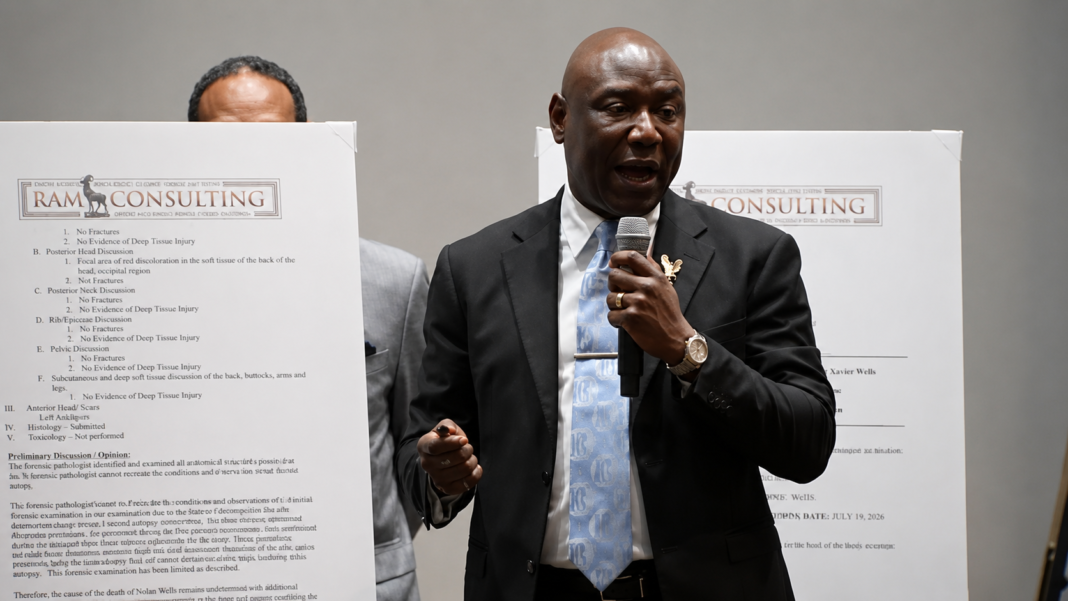
Today, the small Gulf Coast city has become the focus of national attention following the death of 18-year-old Nolan Wells. Civil rights leaders, members of Congress, Hollywood celebrities, and millions of social media users are asking whether race played a role in his death or whether it was a tragic accident.
Those questions deserve complete and honest answers.
But while America views Mississippi through the lens of one heartbreaking death, another story has gone largely unnoticed, one that is separate from the questions surrounding race and centers on whether government officials are ever held accountable when they fail the public.
For more than two years, GC Wire has investigated government transparency, public corruption, and questionable practices in Ocean Springs and across Mississippi. Those investigations have uncovered a recurring pattern: when evidence of misconduct or government failures is presented to the agencies responsible for oversight, meaningful accountability often fails to follow.
National figures such as Ben Crump have focused public attention on allegations of systemic racism. GC Wire’s reporting, however, has repeatedly uncovered a different pattern — one driven by money, political influence, and a lack of transparency. From a controversial automated traffic enforcement program to the quiet privatization of a multi-million dollar publicly funded parking garage, the same themes have surfaced again and again.
This isn’t simply a story about Mississippi’s past. It’s a story about the present. One that happens when transparency breaks down, oversight stalls, and government institutions are asked to police themselves.
A Pattern of Allegations Without Accountability
Long before Nolan Wells’ death placed Ocean Springs in the national spotlight, GC Wire was one of the few media outlets investigating one of Mississippi’s largest scandals.
The investigation centered around a contract with Securix LLC — an Atlanta based company that operated an automated traffic enforcement program.
Securix was launched in Ocean Springs after it was presented to officials by then-City Attorney Robert Wilkinson, a city official who was financially attached to the program and later became an owner of an offshoot company that spread the system across the state.
The scheme used cameras to automatically flag uninsured motorists and subsequently send them citations in the mail.
But these weren’t ordinary traffic tickets.
Despite letters attached to the tickets from then-Police Chief Mark Dunston telling motorists they had been charged with a misdemeanor crime, there was never any official record of the citation created within the city or its court system.
Recipients of the tickets were told to pay a fine directly to a private company or face serious consequences, like suspension of drivers license and high court costs.
However, none of those consequences were real or enforceable. If a motorist chose to go to court to argue their case, they were met by Attorney Wilkinson’s son, who held off-the-book “options arraignments” in the courthouse lobby.
Over the course of that investigation, thousands of pages of documents were obtained through public records requests and internal whistleblowers. Sworn testimony was taken. Court records were reviewed.
Our investigation was able to show the police chief was on the private company’s payroll, as were all the police officers who signed off on the citations.
As public pressure mounted, the Ocean Springs Board of Aldermen quietly voted to cancel the contract with Securix. No official investigation into the city attorney or police chief ensued. Instead, the duo went on to market and implement the scheme elsewhere, profiting from contracts in several other cities across the state.
Some public officials themselves raised concerns about how the programs operated.
In April, two recently elected officials from Ocean Springs, along with GC Wire, submitted a detailed report to multiple agencies outlining what we believed were serious legal and procedural violations that violated the rights of millions and padded the pockets of certain public officials.
Yet despite years of reporting, referrals, and mounting evidence of rights violations, meaningful enforcement has been difficult to find. When the CEO of Securix revealed how local officials in Mississippi had bastardized his program for personal gain and a myriad of laws were ignored, the Mississippi Department of Public Safety pulled the plug.
But that didn’t stop Attorney Wilkinson and former Police Chief Dunston. A new variation of the ticketing scheme was repackaged under the name Intellisafe and continues to thrive across multiple Mississippi cities.
Whether state agencies ultimately conclude those allegations have merit remains their responsibility.
But the lack of visible action has left many citizens questioning whether government oversight in Mississippi is functioning as intended.
Then Came the $8 Million Parking Garage
The next investigation centered on Ocean Springs’ downtown parking garage.
More than $8 million in Gulf Coast Restoration Fund (GCRF) grant money was awarded to the project.
State legislators approved a plan to grant the money based on the promise that the residents of Ocean Springs would own the multi-million dollar structure. The plan was later signed into law by the governor.
But in Ocean Springs, local leaders later “reworked” the deal. The garage was built, but ownership was never transferred to the residents. Instead, private developers kept the garage for themselves and the City now pays them tens of thousands of dollars a year to lease it for public access.
Former Mayor Kenny Holloway, who presented the change, was renting a house owned by the attorney for the developers at the time. That attorney received ten percent of the grant money – and the lavish rental home was later transferred to a trust fund bearing that mayor’s name.
Holloway later put the house up for sale, asking nearly a million dollars.
Over the last year, as city leaders debated whether taxpayers were legally obligated to lease the publicly funded garage from the private developer or whether the taxpayers were the rightful owners of the structure, GC Wire began requesting the grant agreements approved by the Board of Aldermen.
The records did not appear to tell a consistent or believable story. Public records produced by the City appeared to contain inconsistencies that raised questions about whether historical records had later been altered or replaced.
Current City Attorney David Harris – who is the son of the Chancery Court judge currently presiding over certain legal matters involving Nolan Wells – repeatedly told the public the Board of Aldermen approved contracts in May of 2022 that were not even written for several years to come.
That was the basis of their argument that the City would not own the garage and would instead pay tens of thousands of dollars a year in rent to the developers.
Alderman Karen Stennis presented those discrepancies and moved to correct the official record — a vote that, if successful, could have significantly altered the City’s legal position regarding ownership of the parking garage. City Attorney Harris advised the Board against correcting the record, and the motion failed.
After the vote, another aldermen, Steve Tillis, went on record saying he will always vote the way City Attorney Harris tells him to vote.
An extensive investigation by GC Wire showed significant contradictions in how the City maintained the historical records related to the garage, with documents being swapped out, replaced, or disappearing in a manner tailored to whatever the public facing narrative of the time may be.
Those questions became increasingly significant as city officials relied on those same records during public debate over whether the City was obligated to enter into a long-term lease on the parking garage.
The Ethics Commission Was Asked to Decide
Unable to reconcile the discrepancies through public records requests alone, GC Wire filed two formal complaints with the Mississippi Ethics Commission.
The first, filed May 22, 2026, alleges that the City’s official meeting records no longer accurately reflect the Board’s final action as required by Mississippi’s Open Meetings Act.
A second complaint, filed six days later, alleges repeated violations of Mississippi’s Public Records Act during efforts to obtain documents related to the same project.
Together, the complaints ask Mississippi’s primary government transparency agency to determine whether Ocean Springs complied with two of the state’s most important open-government laws.
Despite immediate acknowledgement by the Mississippi Ethics Commission that both complaints were received in May, neither has been served on the City of Ocean Springs.
State law is clear. Upon receipt of an ethics complaint, the Ethics Commission must serve the complaint on the head of the government body. The respondent then has 14 days to submit a response to the complaint.
Two months later, that still has not happened. Without service, the statutory 14-day response period for the City has never begun. As a result, the complaints remained unresolved while the City continued making decisions related to the parking garage project.
After learning that the complaints had not been served, GC Wire asked the Commission to identify the statutory authority permitting complaints to remain unserved.
The Ethics Commission did not respond.
Who Watches the Watchdog?
The Ethics Commission occupies a unique role in Mississippi government.
It is the agency charged with enforcing the state’s Open Meetings Act and Public Records Act.
But if a citizen believes the Commission itself has failed to carry out a mandatory duty, Mississippi law provides no comparable administrative complaint process.
There is no higher state agency designated to review those decisions.
In practical terms, citizens appear to have only a handful of options: ask elected officials to intervene, seek legislative changes, or file a petition for a writ of mandamus asking a court to compel the Commission to perform what they believe is a mandatory statutory duty.
For many Mississippians, litigation is simply not a practical option.
GC Wire reached out to State Senators Jeremy England and Brice Wiggins. Both represent districts that include parts of Ocean Springs. The letters explained the situation, included copies of the filed complaints, and quoted Mississippi Codes that compel the Ethics Commission to serve the city upon receipt of a complaint.
Both letters asked for their assistance to ensure the city gets served. As of publication, neither Senator responded.
A Bigger Story Than Ocean Springs
America is watching Mississippi because of Nolan Wells.
Many viewers see only a debate about race.
Others see only a grieving family searching for answers.
But another question deserves attention.
Can citizens rely on Mississippi’s transparency laws if the agencies responsible for enforcing those laws are themselves insulated from meaningful oversight?
The answer to that question will affect far more than one city, one parking garage, or one investigation.
It will determine whether ordinary citizens have an effective way to hold government accountable — or whether accountability ends where government oversight begins.
Government transparency laws are only as effective as the institutions willing to enforce them. If the agency charged with policing transparency cannot itself be held accountable when citizens question its actions, Mississippi’s promise of open government exists largely on paper.


Reading this account turns my stomach. The literal sense that elected individuals turning a blind eye and have the appearance if questionable actions with no legal accountability is beyond the realm of comprehension. Reamly? Not one city, state or federal authority has any problem with what’s happening here!?!
No violator ever paid Securix a single dollar but what Gregory and Wilkinson did was highly illegal and only a Federal Investigation will expose the truth. A judge threatened jail if I spoke with the FBI, hid court transcripts and ignored the law i support of criminal conduct. Hundreds of thousands of dollars in state funds were stolen, hundreds of thousands more diverted and tens of thousands of people had their privacy violated. We have the proof. Why has this not been investigated?