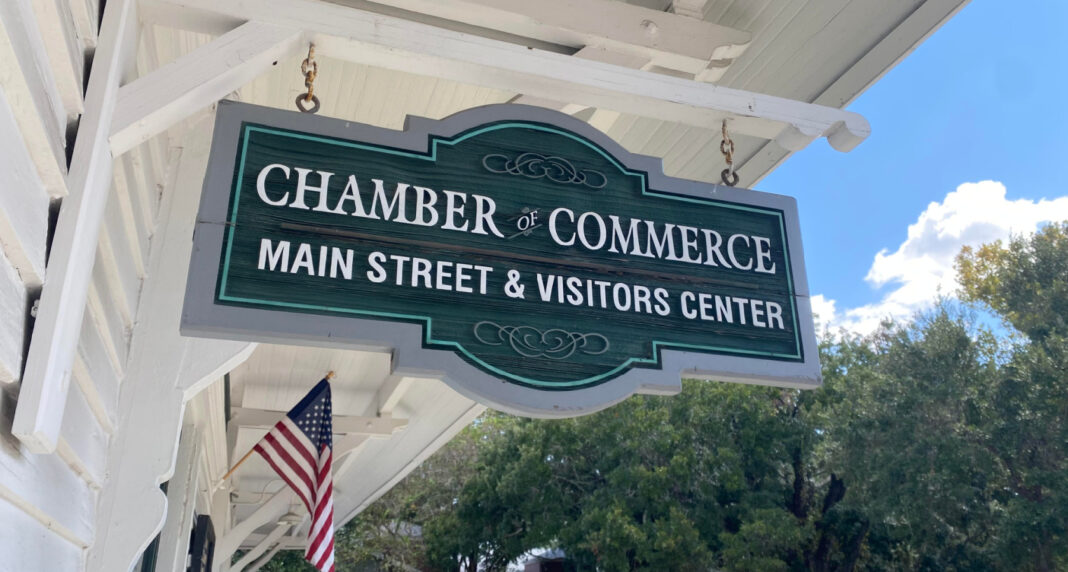
OCEAN SPRINGS, MS — The collapse of the Hancock County Tourism Development Bureau, which is shutting down this month after missing payments and facing questions about unaccountable spending, is raising concerns in Ocean Springs — where the city funds its marketing wing in much the same way, with no written agreements in place.
The Hancock County Collapse
Hancock County Tourism, once responsible for marketing its communities to visitors, is closing after financial shortfalls and more than $35,000 in missed payments to Cruisin’ the Coast. The bureau operated for years without formal agreements on how taxpayer funds should be used.
As problems mounted, board members resigned, questions went unanswered, and city leaders admitted they had no way of knowing how the money was spent. Cruisin’ the Coast’s executive director sent a demand letter seeking back payments, but the agency lacked the funds to respond.
Bay St. Louis Councilman Kyle Lewis voiced the frustration: “If we’re giving taxpayer dollars to something like that, we deserve to know how that money was spent.”
According to a Sun Herald report, Lewis has since asked State Auditor Shad White’s office to investigate how Hancock County Tourism spent money received from his city.
Ocean Springs Operates the Same Way
Ocean Springs has a nearly identical setup. Each year, the city allocates tens of thousands of dollars to the Ocean Springs Chamber of Commerce – Main Street – Tourism Bureau without contracts or memorandums of agreement defining how the money will be used.
That structure has already drawn scrutiny. Alderman Shannon Pfeiffer recently asked the city clerk for any agreements on file. The clerk provided no agreements in response to Pfeiffer’s request, only meeting minutes.
“When taxpayer dollars are involved, there should be a clear agreement in writing,” the Ward 4 alderman said. “Right now, the city has no way of tracking or controlling how this money is used.”
A Record of Funding Without Safeguards
Board minutes show the Chamber has received steadily increasing amounts over the past decade, with allocations made by simple vote and no performance requirements attached:
- 2015: $25,000 from the tourism tax was sent directly to the Chamber.
- 2016: $25,000 was allocated for restaurant and lounge tourism promotion. Aldermen debated whether to cap the amount or redirect excess funds but ultimately left it in place.
- 2017: Funding for that year increased to $60,000, split between hotel tax and food and beverage tax revenues.
- 2019 (Sept. 5): Aldermen approved an additional $10,000 allocation.
- 2019 (Sept. 13): Funding was raised to $40,000 from food and beverage tax revenues.
At no point in the minutes is there reference to a contract, reporting requirement, or performance measure.
“These decisions were made year by year without any safeguards,” Pfeiffer added. “That’s not accountability.”
The Chamber’s Position
When asked if a written agreement exists, Chamber CEO Cynthia Sutton pointed to two passed state bills: House Bill 1836 (1998), which created a lodging tax to fund tourism and economic development, and Senate Bill 3206 (2007), which authorized a restaurant and bar tax to support tourism, marketing, recreation, and public safety facilities. She described the Chamber as “the marketing and tourism arm of the city” and referred to old city minutes as documentation of the arrangement.
While those laws clearly earmark the special taxes for economic development purposes, they do not designate the Chamber as the managing entity. Instead, the statutes require the City of Ocean Springs to separately account for the revenues and subject them to annual independent audits. Without a written contract or reporting requirement, there is no binding mechanism to ensure Chamber expenditures align with those requirements.
Accountability Gap in the Books
City officials could argue the money is technically accounted for because the city’s audit shows the check was written. On paper, the ledger balances: hotel and restaurant taxes come in, funds go out to the Chamber.
But that only proves the city transferred the money. It does not prove the Chamber used it for tourism, marketing, or economic development — the very purposes spelled out in the state laws that created the taxes. Without a contract or reporting requirement, there is no paper trail to show how those dollars were actually spent once they left City Hall.
That distinction matters because the legislation behind the special taxes requires the funds to be “dedicated and expended solely” for tourism and economic development, with separate accounting and annual audits. If the city’s only evidence is “we cut a check to the Chamber,” taxpayers are left without any assurance the spending stayed within the law.
“That is the entire point of accountability and why we need agreements in place,” Pfeiffer stated. “We cannot just assume it was spent correctly. Residents should be able to see proof.”
Mayor Declines to Answer
Mayor Bobby Cox was asked whether he viewed Hancock County’s tourism collapse as a cautionary tale for Ocean Springs, and whether he supported creating a formal agreement with the Chamber to ensure accountability for public funds. Cox declined to respond.
An Oversight Body Put on Hold
City ordinances list an Economic Development Council (EDC) as Ocean Springs’ official oversight body for economic development. The nine-member council was created in 2010 and tasked with recommending strategies, recruiting businesses, and submitting annual reports to the board. The Chamber’s executive director or designee was guaranteed one seat.
But on July 3, 2018, the Board of Aldermen voted unanimously to suspend the EDC. At the time, aldermen argued the city should focus on a private consultant, Retail Coach, instead of maintaining the council. They noted that most EDC member terms had expired days earlier. The Board agreed to suspend the council, with the option of dissolving it or amending the ordinance at a later date.
City Clerk Christine Millard was asked if the Council has since been operating, but her office failed to respond to the inquiry. GC Wire has filed a public records request asking for the most recent minutes and annual report, but that request has not yet been fulfilled.
No actions to reinstate the board have been located in records reviewed by GC Wire nor found on the city’s website. Yet the Chamber continues to receive tens of thousands of dollars in public funding each year without the oversight structure the ordinance envisioned.
What State Law Says
A 2000 Mississippi Attorney General opinion addressed whether cities can provide support to Chambers of Commerce and Main Street programs. The opinion confirmed that municipalities are authorized to contribute funds or even provide office space to such groups.
- Statutory Authority:
Mississippi Code § 21-19-44 and § 21-19-44.1 allow cities, in their discretion, to contribute, donate, or appropriate funds to Chambers of Commerce, Main Street projects, and other local economic development nonprofits. - Contracts Expected:
The statutes specifically authorize municipalities “to execute contracts and agreements with” these organizations in exchange for funding. The legal framework anticipates written agreements as part of the process. - Limitations:
The Attorney General also made clear Chambers and tourism bureaus are independent nonprofits, not city departments.
In practice, this means Ocean Springs is within its rights to support the Chamber of Commerce, but the lack of written agreements puts it at odds with the accountability mechanisms the law envisions.
What the Chamber Contributes
The Ocean Springs Chamber of Commerce – Main Street – Tourism Bureau is active in promoting the city. The Chamber operates the official visitor center downtown, organizes community festivals, and markets Ocean Springs as an arts and tourism destination. In 2013, Ocean Springs Main Street won the Great American Main Street Award, a national recognition for preservation and revitalization efforts.
Sutton has emphasized that the Chamber’s mission includes business recruitment, economic vitality, and cultural preservation. Those efforts have helped attract visitors, support local merchants, and shape the city’s identity as a regional destination.
Alderman Pfeiffer acknowledged those contributions. “The Chamber does good work for Ocean Springs,” she said. “But when taxpayer dollars are involved, there should still be accountability. These are not private donations, they are public funds.”
Accountability Concerns Beyond Ocean Springs
The accountability question is not limited to the Coast. Auditor Shad White recently warned against the dangers of giving public money to nonprofits without oversight. His office’s latest audit found millions in state grants spent on salaries, perks, and gift cards instead of intended programs.
“The state must stop handing taxpayer dollars to nonprofits with vague goals and then failing to monitor what these nonprofits do with it,” White said in a statement. “The government is wasting so much money.”
Although White was speaking about state-level programs, the warning resonates locally. Ocean Springs benefits from the Chamber’s work, but the city continues to transfer tens of thousands of dollars each year with no contract, no reports, and no oversight — the very conditions auditors say invite waste.
Despite current and past ways, Pfeiffer said she is confident other Ocean Springs officials will soon be willing to work towards a formal agreement with the Chamber that would properly track how taxpayer money is spent.