OCEAN SPRINGS, MS — One of Mayor Bobby Cox’s first acts in office was to shut down a surveillance practice his predecessor refused to take seriously: hidden microphones inside the Ocean Springs City Hall that had been recording conversations for the previous four years.
The audio function, built into the building’s camera system, quietly captured voices in public areas without notice to residents. The system was installed without public debate and without authorization of the Board of Aldermen.
The practice only came to light earlier this year, when GC Wire reported that City Hall was not just filming people but also listening to them. The revelation raised questions about whether the city had crossed into illegal surveillance.
Why Secret Audio Was a Problem
Mississippi is a one-party consent state, meaning conversations may be legally recorded if at least one person in that conversation agrees.
Federal wiretap law and state statutes both prohibit the interception of oral communications unless one of two conditions is met:
- Consent: at least one participant knowingly consents, or
- Notice: the public is clearly informed that audio recording is taking place.
Neither condition was met at City Hall. Residents had no idea they were being recorded, and no consent was obtained.
A proper sign, prominently posted and explicitly stating that audio and video surveillance was in use, could have cured the legal defect. But City Hall never provided that notice.
Instead, city officials, like then-RDA member Kenny Williams, took to social media to defend the administration’s practice. “It’s legal,” he unequivocally noted to a resident who had concerns. But the law is clear: recording conversations without at least one party’s consent is not legal.
‘We Ordered a Sign’
After GC Wire exposed the surveillance, then-Mayor Kenny Holloway was asked about the legality of the recordings. His response was brief. “We ordered a sign,” he stated at May 2025 Board of Aldermen meeting.
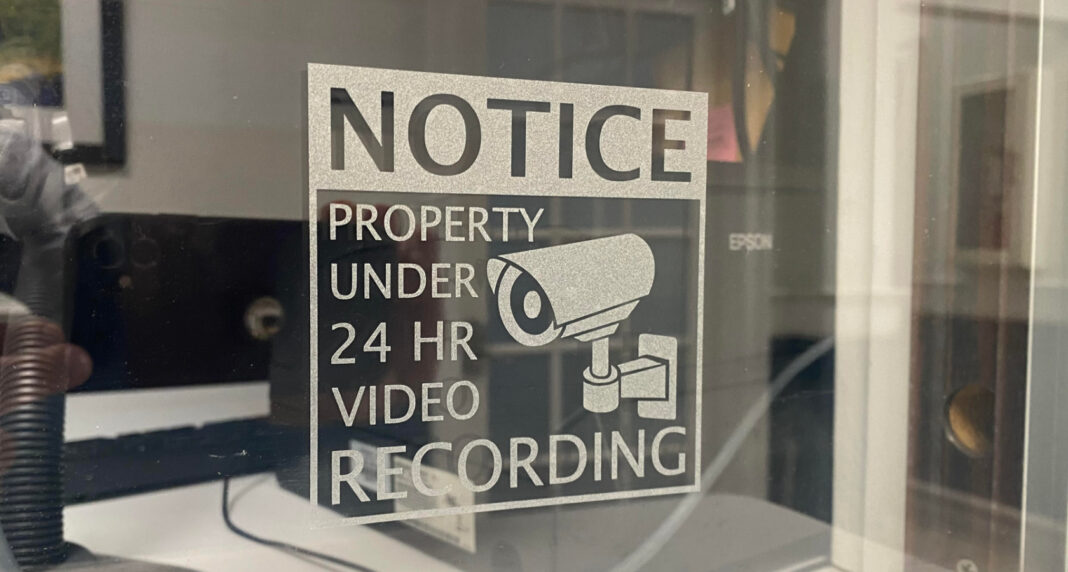
But the two signs that eventually appeared – one at the front door and one at the Water Department window – did not mention audio. They simply warned that “video recording” was in use. That wording failed to address the real problem.
Under state and federal law, while citizens generally expect cameras in government buildings, audio surveillance is different. Recording voices without consent or clear disclosure can amount to unlawful wiretapping.
In other words, Holloway’s sign didn’t solve the controversy — it seemed to have mocked it.
A New Administration, A Different Answer
On July 1, a new mayor and board of aldermen took office. Several board members told GC Wire the audio recording function was immediately shut off.
Yet, when the city was asked for confirmation, the official response only deepened the confusion. In reply to a public records request, Ocean Springs stated:
“The City of Ocean Springs has no written documentation, system settings, or records confirming that the audio recording function of the surveillance system has been disabled or deactivated at the Ocean Springs City Hall.”
That meant that, on paper, there was no proof the microphones had ever been turned off.
Mayor Cox Confirms
Last week, Mayor Bobby Cox provided the clearest answer yet. Speaking to GC Wire, he confirmed he personally ordered the audio recording function to be stopped. “It was stopped,” Cox said. “It was one of the first things we did.”
That statement marked the first direct acknowledgment from city leadership that the microphones — after nearly four years of operation — had been silenced.
Green Bay’s Expensive Lesson
Ocean Springs is not the first city to face backlash over hidden audio surveillance. In Green Bay, Wisconsin, a similar discovery led to a lawsuit that cost taxpayers dearly. Once the practice was exposed, the Green Bay City Council immediately voted to end it.
Ocean Springs took a different approach under Holloway’s administration. Once exposed, the former mayor and Board made no attempt to stop the practice. Only after a new mayor and Board took office in July was the controversy addressed and squashed.
Lingering Questions
Even with the microphones off, the controversy leaves open questions:
- Who had access to the recordings?
- How many hours of conversations were captured?
- Were the recordings ever reviewed or used?
- And why does the city have no documentation showing when or how the audio was disabled?
For years, residents walked into City Hall unaware that their voices might be recorded. Now officials say the practice has stopped. But with no paper trail, the public is left to take them at their word — the same government that kept the microphones a secret in the first place.
To date, the issue has not been raised publicly by the city’s Board of Aldermen.