

An Editorial by GC Wire Publisher E. Brian Rose
Ocean Springs could have solved its civil-rights problem for free.
No outside lawyers. No lawsuits. No headlines.
All it would’ve taken was a short training session and a little respect for the First Amendment.
Several times before filing a federal civil-rights lawsuit, I offered the city a no-cost solution — a simple communications protocol and First Amendment training for staff and elected officials. After filing, I offered again. Each time, the city attorneys declined without ever presenting the offers to the mayor or Board of Aldermen.
That refusal wasn’t new. It’s part of a pattern — one that’s been draining this city for years.
Cheaper Lessons They Ignored
When First Amendment activist Jeff Gray was trespassed in Ocean Springs for holding a sign at City Hall, he offered to settle the case for next to nothing — a $1,791 donation to a veterans’ charity and the same kind of First Amendment training I later proposed.
Public records show the offer never reached the board or mayor. Then-City Attorney Robert Wilkinson made the decision himself. Instead of taking the nearly free lesson, the city went to federal court where counsel billed hundreds of taxpayer dollars per hour to fight a case the city would quietly settle nearly a year later — and for far more than the original charitable offer.
They paid to lose when they could have learned for free.
And it wasn’t the first time Ocean Springs mistook stubbornness for strength.
A few years earlier, the city was sued in federal court by Psycamore LLC, a behavioral-health provider, over zoning restrictions that the U.S. Department of Justice said violated constitutionally protected civil-rights. Ocean Springs ultimately paid nearly a half million dollars in settlements and compliance costs, plus hundreds of thousands in attorney bills — much of it paid to the same law firm still advising the city now.
The conduct was so significant that the city’s insurance carrier declined to defend, leaving residents to shoulder every dollar of legal fees and settlement costs. DOJ then placed Ocean Springs under a multi-year monitoring program to ensure future compliance.
Instead of learning from that humiliation, the city doubled down with that same mindset still driving its decisions today.
Earlier this year, I filed a federal civil-rights lawsuit alleging that Ocean Springs officials retaliated against me for my reporting — restricting press access, weaponizing public resources, and attempting to silence coverage critical of City Hall.
The case isn’t about politics. It’s about whether a local government can punish a journalist for doing his job or residents for speaking out.
The Retaliation That Didn’t Stop
That defiance has turned inward.
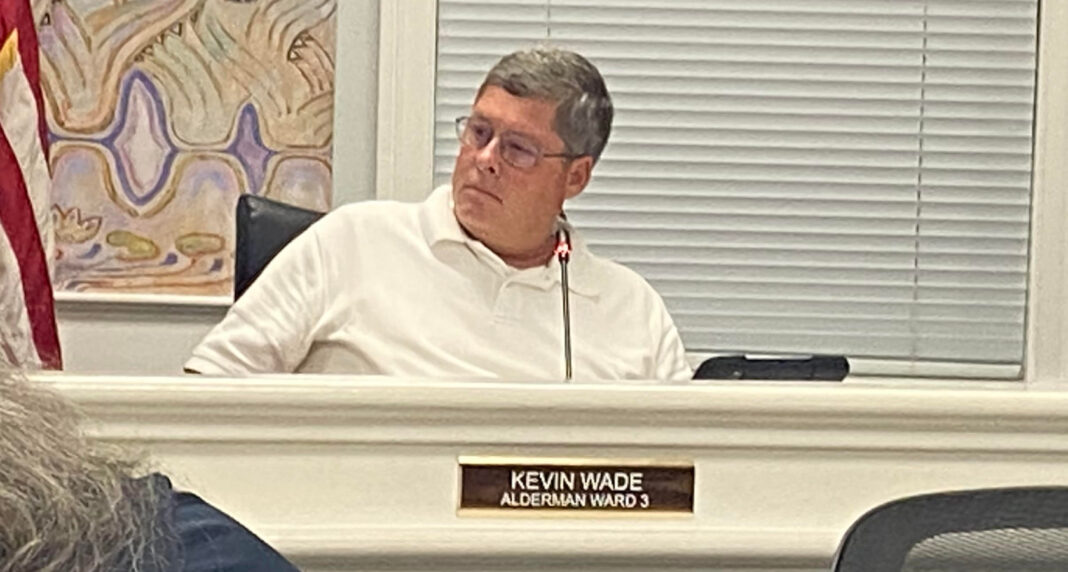
At last week’s public Board meeting, Alderman Kevin Wade launched into a tirade that had little to do with “access” and everything to do with anger over exposure.
His fury focused on the manner in which a colleague presented her request that the Mississippi Attorney General review whether City Attorney David Harris misstated state law while urging approval of a six-figure contract for his own firm, and who she shared that request with.
Rather than address the disputed legal advice, Wade instead warned fellow officials not to share documents — public or otherwise — with anyone suing the city, specifically naming me several times. That wasn’t a defense of transparency; it was an attempt to control information. It was viewpoint discrimination in real-time and a quiet form of prior restraint.
Other board members sat in silence on the issue of sharing information. No one reminded him that the First Amendment doesn’t pause when a reporter files a lawsuit to defend his First Amendment rights.
The Supreme Court made that clear more than fifty years ago.
During the Pentagon Papers case, the federal government was in open litigation with The New York Times and The Washington Post, yet both newsrooms continued covering the White House, attending press briefings, questioning the President, acquiring documents, and even still having access to Air Force One.
Stopping NYT and WashPo from continuing to report and have access while being litigants would have equated to prior restraint.
As Justice Brennan wrote, “any system of prior restraints of expression comes to the Court bearing a heavy presumption against its constitutional validity.”
Ocean Springs officials appear to have missed that ruling — and the spirit behind it.
It’s Not Just Me – They Target All of Us
Over the last couple of years, city officials have repeatedly used the same tactic against residents. When citizens post opinions or criticisms on social media, certain officials call them out by name at Board meetings — a deliberate chilling effect meant to warn others what happens if they speak up. That intimidation was on full display just last month when the new city attorney publicly named two residents after they criticized leadership policies.
Even the city’s former mayor, Kenny Holloway, joined in. In an op-ed published in the Ocean Springs Weekly Record, Holloway told residents to “step back from the keyboard” and use Facebook for posting pictures of grandbabies instead of criticizing his administration.
Coming from the city’s highest office, it wasn’t just tone-deaf — it was policy by press release, a public endorsement of prior restraint from the top.
Previous city attorneys have gone even further, advising aldermen not to respond to residents during public-comment periods — in one 2024 instance occurring because a relative of the speaker merely mentioned possibly filing an ethics complaint against the city.
The message couldn’t be clearer: dissent is not welcome here.
And it hasn’t stopped at words.
Aggression After Exposure
One high-ranking city official — someone I’ve never met face to face — even went to the chief of police and asked if action could be taken because he said he felt threatened by articles I had published that exposed the Securix ticketing scandal. A misuse of law enforcement as a tool against speech.
The campaign to chill my reporting has since become official policy.
In July, newly appointed City Attorney David Harris and I discussed a plan for media protocol. He explicitly stated that non-litigation press inquiries were “not prohibited.” That changed the moment my reporting began focusing on his interpretation of state law and the contract that benefited his firm. Almost overnight, the city removed me from the press release list and adopted the “because you are a litigant” rule — a directive to stop asking questions and a restriction with no basis in law.
It’s the same line Kevin Wade shouted from the dais — and it’s just as unconstitutional.
The Supreme Court has made clear that government cannot condition access by viewpoint or identity. In Minnesota Star & Tribune Co. v. Minnesota Commissioner of Revenue (1983), the Court held that targeted burdens on the press violate the First Amendment when they punish specific speakers or viewpoints. They made no distinction for journalists who are litigants in civil-rights lawsuits.
They Tried to Gag a Reporter
This week, the city’s lawyers asked a federal judge to restrict me from contacting city officials for comment or from receiving public information outside the records-request system.
They didn’t allege threats, harassment, or interference. Their argument boiled down to: we just don’t want to receive or answer his emails. More likely, they don’t want to see me insert into articles, “We asked the mayor for a response, but he declined to answer.”
The judge did not honor the city’s request for a protective restraining order. Instead, he instructed both sides to work out a protocol on their own.
What they sought was prior restraint — the kind of suppression the Supreme Court rejected in New York Times Co. v. United States (1971). And in New York Times Co. v. Sullivan (1964), the Court held that public debate must be “uninhibited, robust, and wide-open,” even when unflattering or harsh.
The First Amendment does not turn off when the government is a defendant in a First Amendment lawsuit.
Progress They Won’t Admit
Not everything has stayed the same. Some of my reporting forced quiet corrections.
Meeting minutes that once omitted key actions now reflect them. Audio surveillance without notification was quietly removed after public exposure. Tens of thousands of dollars quietly handed to outside businesses will now come with written agreements. And more.
But as others have learned before us, transparency only comes when someone insists on it.
And Ocean Springs isn’t unique in that fight.
In Baton Rouge, a citizen-journalism outlet cut off from press releases and news conferences sued and won — the city paid $30,000 and restored access after learning that “we don’t have to answer you” is not a legal defense.
In Green Bay, officials secretly installed audio recorders inside City Hall without clear notice. After residents sued, the city paid over half a million dollars in settlements and fees. It’s the only other city we found that tried what Ocean Springs did — and taxpayers there paid dearly for it.
Ocean Springs can learn from those bills, or it can hand its own taxpayers the same tab.
The Cost of Defiance
Ocean Springs has spent years and countless taxpayer dollars resisting simple accountability.
It fought Jeff Gray until it paid much more than his original charitable offer.
It ignored no-cost reform proposals, then paid outside counsel to defend the indefensible.
It even lost its insurance coverage because the city’s own insurer refused to defend behavior so extreme.
This isn’t about retaliation or revenge. It’s about restoring the promise that citizens and journalists can ask questions without punishment.
My lawsuit isn’t just about me. It’s about accountability — about reminding this city that the Constitution doesn’t stop at the city limits. What Ocean Springs has done to me, it has done to others who dared to speak out. If this case ends that pattern and restores a measure of honesty and humility in local government, then the fight will have been worth it.
This isn’t about one reporter or one city. It’s about whether truth and opinion can still be spoken without fear of punishment — and whether those in power remain bound by the very Constitution they raised their right hand and swore to uphold.
Ocean Springs can keep paying future lawyer bills to protect fragile egos, or it can finally invest in what it claims to value — open government and free speech.
(The City disputes aspects of these accounts; the facts cited here derive from public records, meeting videos, and court filings.)
A Note From the Publisher
GC Wire is a one-man newsroom — mine. It’s the only outlet that has followed every thread of corruption and misconduct in Ocean Springs, from the Securix traffic-ticket scheme that bypassed the courts to city officials benefiting from their own legal misstatements.
My decision to stand up for my rights — and for the rights of every resident — has drawn criticism from those who think that looking the other way somehow preserves the “charm” of Ocean Springs. But charm built on silence isn’t charm at all; it’s complicity.
Truth-telling comes with a cost. Investigations, records, and litigation are expensive.
If you believe in independent journalism that exposes what others ignore, I invite you to stand with GC Wire.
Help me continue pursuing justice, transparency, and accountability in our city. You can contribute and be part of real change by using the form below.


Good job Brian… It takes guts and brains to do what you do… Kudos
GC Wire is the only place I have been able to find truth in a very long time. It is a shame that the truth is about those who run the city while trying to step on the First amendment and all the time at the cost of the taxpayer
You would think that they would have learned from past experience…as far as I am concerned…take em to the bank and make them do what they are required to do by law….I for one, am getting sick of this garbage at city hall…