
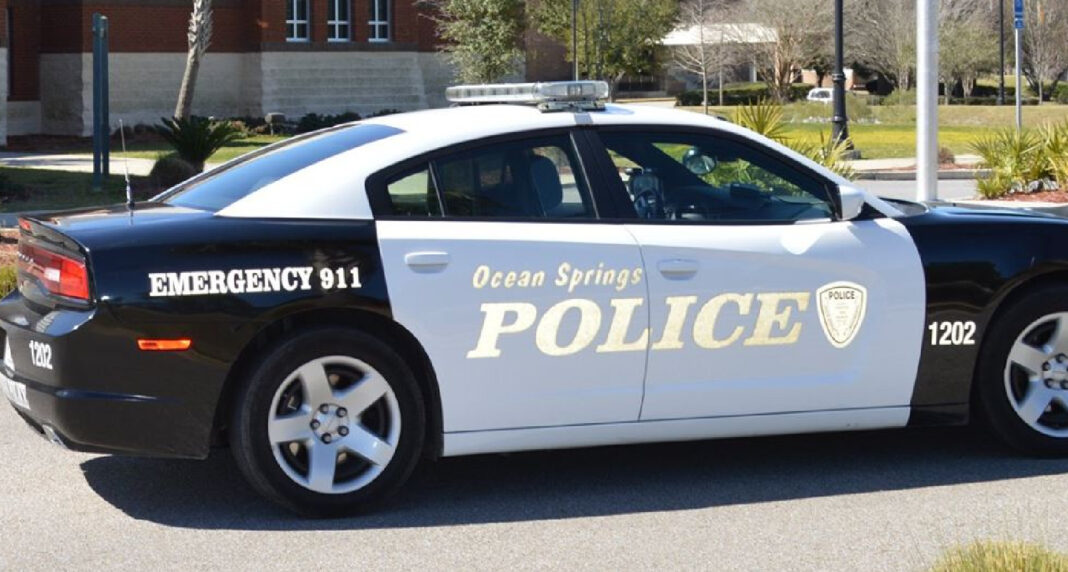
OCEAN SPRINGS, MS – Newly acquired documents reveal police officers in Ocean Springs were paid directly by a private company to charge residents with misdemeanor crimes.
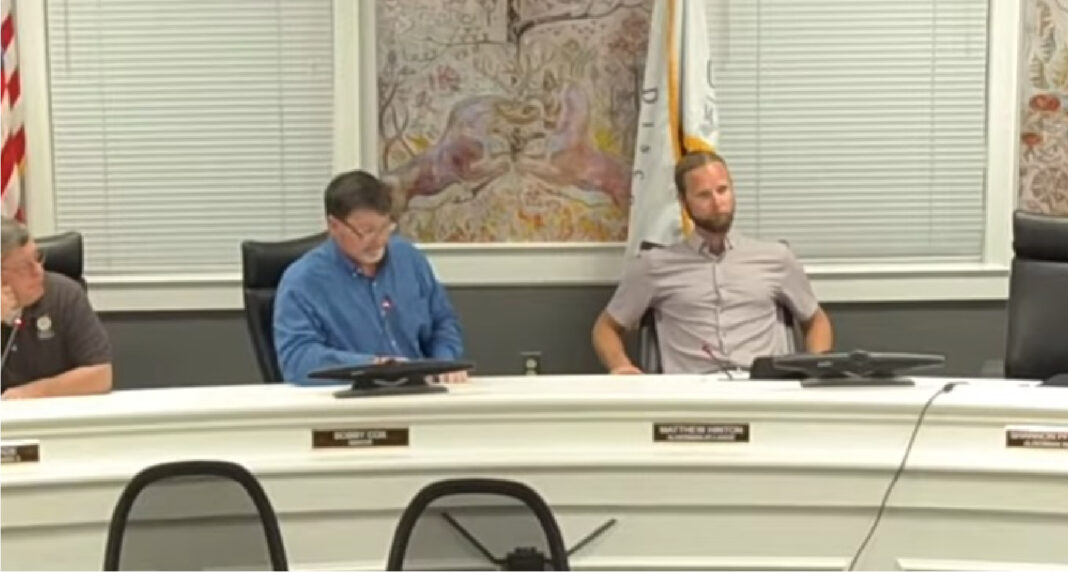
Mayor Bobby Cox, who served as Alderman-at-Large at the time, joined Aldermen Kevin Wade and Rob Blackman to authorize the arrangement – a practice the Attorney General had already warned police had “no authority” to execute.
At the same time, state-sanctioned overseers found that some of the criminal citations were issued by private company employees without any law enforcement involvement at all.
During the program, more than 10,000 drivers in Ocean Springs were charged with criminal violations and threatened with license suspension, even though their cases were kept off the municipal court books.
These latest issues have emerged as another chapter in the Securix controversy that has plagued Ocean Springs for nearly five years.
Officers Paid to Extract Money that Went Straight to their Private Employer
Securix was a company contracted to help administer a camera-based system designed to identify vehicles operating without insurance. The contract with the company included a clause allowing the company to “contract with City Law Enforcement Officers if approved by City.”
In May of 2021, the Board approved the contract pending the legal review for validity by Amy St. Pe, a former law partner of then-City Attorney Robert Wilkinson.
Three months after approving the contract, Cox and the rest of the Board voted unanimously to put the clause into effect by authorizing the rehire of two retired officers “to be paid by Securix Systems for the validation of insurance citations.”
Several other police officers, along with Chief of Police Mark Dunston, Executive Assistant to the Chief Charlene Anderson, and the city’s lead police dispatcher Donna Stazco were also being paid directly by Securix, according to internal documents and information shared with GC Wire.
Officers were paid $30 per hour to “validate” citations that were mailed to residents suspected of owning vehicles without insurance, according to the documents. The citations, signed by the officers, included a demand to pay a $300 diversion program fee directly to the company paying the officers, or else face license suspension and high court fees.
A 2002 opinion from the Mississippi Attorney General’s Office warned that sworn officers cannot receive payments from private companies while exercising state law enforcement authority.
“There is no authority for individual ‘off-duty’ officers to receive payments from private entities for performing law enforcement functions under color of state law,” the opinion states, adding that “such a practice would raise serious questions of liability, of use of public office for private gain, and of the legality of the officer’s law enforcement authority.”
Despite this longstanding warning from the Attorney General’s Office, Cox, Wade and Blackman voted to authorize the arrangement that proved to have no judicial oversight.
Officers hired by Securix signed citations informing residents they had been charged with a criminal offense, summoned to appear in municipal court, and warned that failure to act could result in license suspension and significant court fines.
However, sworn responses to a federal court subpoena show that of the 10,481 citations issued in Ocean Springs, only 23 were ever filed with the municipal court – the only agency that could impose the penalties threatened by officers.
Criminal Charges Without Police Involvement
Further documents obtained by GC Wire allege that some of the “charges” sent to residents were identified and processed without any direct involvement from law enforcement.
The issue surfaced in a December 2022 notice of default sent to Securix by attorneys representing HDI Solutions, the company approved by the state’s Legislature and Governor for managing sensitive driver and vehicle insurance records maintained for the Mississippi Department of Public Safety.
“A review of the system history shows that Securix personnel issued citations without first submitting the relevant license plates information to Ocean Springs’ law enforcement personnel for query through the Mississippi Law Enforcement Network,” the letter stated.
Under the governing agreement, a sworn law enforcement officer from Ocean Springs was required to conduct the vehicle query through the state’s Law Enforcement Network before any enforcement action could proceed.
HDI warned that the alleged practice violated the terms of the data sharing agreement and could expose both Securix and participating municipalities to significant legal risk.
It is unknown whether HDI was informed the officers were being paid by Securix, not the city, to investigate and charge motorists with criminal traffic violations.
Repeated Warnings from Securix Management
Internal documents show that Securix executives repeatedly warned the group responsible for operating the Mississippi program that several practices being used in Ocean Springs and other cities violated the company’s own operating standards.
Those warnings were directed to individuals involved in overseeing the program locally, including Ocean Springs City Attorney Robert Wilkinson, his son Alex Wilkinson, and political consultant Josh Gregory.
In a detailed internal review of the Mississippi operation, Securix executive Nick Ferrara warned that the way citations were being processed could compromise the integrity of the system.
“Allowing either non-law enforcement personnel or even officers to see vehicle owner information undermines the ‘unbiased and fair system’ intent,” Ferrara wrote.
Ferrara explained that the system was designed so that sworn officers would determine probable cause based only on image data captured by license plate cameras. The process was intended to prevent enforcement decisions from being influenced by personal information about the vehicle owner.
However, internal communications show that personnel operating the Mississippi program were accessing vehicle owner data through investigative databases and reviewing that information before the law enforcement validation process occurred.
Ferrara also raised concerns about the use of filtering practices that removed certain vehicles from the enforcement system before police review.
The internal review warned that these practices could undermine the integrity of the enforcement process and expose the program to legal challenges.
Despite the warnings, the practices continued as the Mississippi operation expanded across several cities.
In a 2024 email — roughly a year after Ocean Springs canceled the program — Securix Chairman Jonathan Miller warned the same Mississippi operators who had been running the system locally that the company intended to shut down operations.
“We are notifying all current users and shutting down the system prior to eliminating this abuse,” Miller wrote, adding, “We will not allow operations that circumvent the law.”
(Last updated March 6, 2026 at 3:32 PM.)

Wow!