

OCEAN SPRINGS, MS – Earlier this month, the Ocean Springs Board of Aldermen voted to suspend operations of the Redevelopment Authority (RDA), a five-member advisory group that had recently narrowed its focus to a single objective: getting a hotel and convention center built on the contaminated Leica property.
In recent meetings, the RDA made it clear that its mission had become less about broad redevelopment and more about rushing a specific deal into reality. That deal involved the city working with a private developer to build a hotel and convention space on land long known for chemical contamination from past industrial use.
Toxic History at a Downtown Corner
The site in question sits at the corner of Government Street and Pine Drive, a highly visible and heavily trafficked location in the heart of downtown Ocean Springs. The site is currently owned by Leica Microsystems and for decades was home to other industrial tenants.
Environmental reports have documented the presence of hazardous substances on the property, including chemicals linked to cancer and groundwater contamination. Despite its prime location, the site has remained largely untouched due to the cleanup challenges and health risks it presents.
The Mississippi Department of Environmental Quality (MDEQ) has stated that if a hotel is built on the Leica site, developers would be required to install a vapor intrusion barrier and would not be allowed to place guest rooms on the ground floor.
Public Funds for a Private Project
To help move the project forward, the RDA had been working behind the scenes to secure state-level grant funding through the Gulf Coast Restoration Fund (GCRF). This program, administered by the Mississippi Development Authority, distributes millions of dollars each year from Deepwater Horizon oil spill settlement funds. The money is intended to support economic recovery and infrastructure improvements in coastal communities.
In this case, the RDA appeared to be acting as a middleman — coordinating efforts between the city, private developers, and state officials in hopes of securing a large GCRF grant to make the hotel project financially viable. While GCRF grants are meant to serve the public good, critics argue that awarding public money to support a hotel on a toxic site, with limited public backing, raises serious questions about priorities and accountability.
Conflict of Interest Questions Surface
Adding to the concern is the role of RDA member Kenny Williams, the most outspoken advocate for the project. Williams reportedly owns or operates more than half a dozen bars and venues within walking distance of the proposed hotel site. Many residents see this as a textbook conflict of interest. Increased tourism and foot traffic could directly benefit his businesses, casting doubt on whether his support for the project stems from civic interest or personal gain.
Williams has brushed aside those concerns. On a recent episode of a local podcast, he argued that business owners are the ones who should be shaping the city’s direction. “You have to have skin in the game,” he said, implying that only those with financial interests downtown should have a voice in redevelopment decisions. He went on to describe critics of the hotel project and other developments as “chaos agents,” dismissing residents who have questioned the environmental safety and long-term impact of the RDA’s priorities.
A Pattern of Secrecy
The RDA has operated under a cloud of secrecy that stands in stark contrast to other city boards and commissions. Unlike the Board of Aldermen, Planning Commission, Historic Preservation Commission, or Zoning Board, the RDA’s meetings are not listed on the city’s website calendar, nor are they livestreamed on YouTube — even though they take place in the same public meeting room equipped with full video capability. This has led many to ask: what exactly is being hidden?
The RDA’s public records process is also different from that of the rest of city government. While nearly all city documents can be requested using the standard public records request form available online, the RDA requires its own separate process. The lack of a uniform system adds yet another layer of opacity to a group that has played a significant role in shaping major development efforts, often without public input or oversight.
The Board Hits Pause
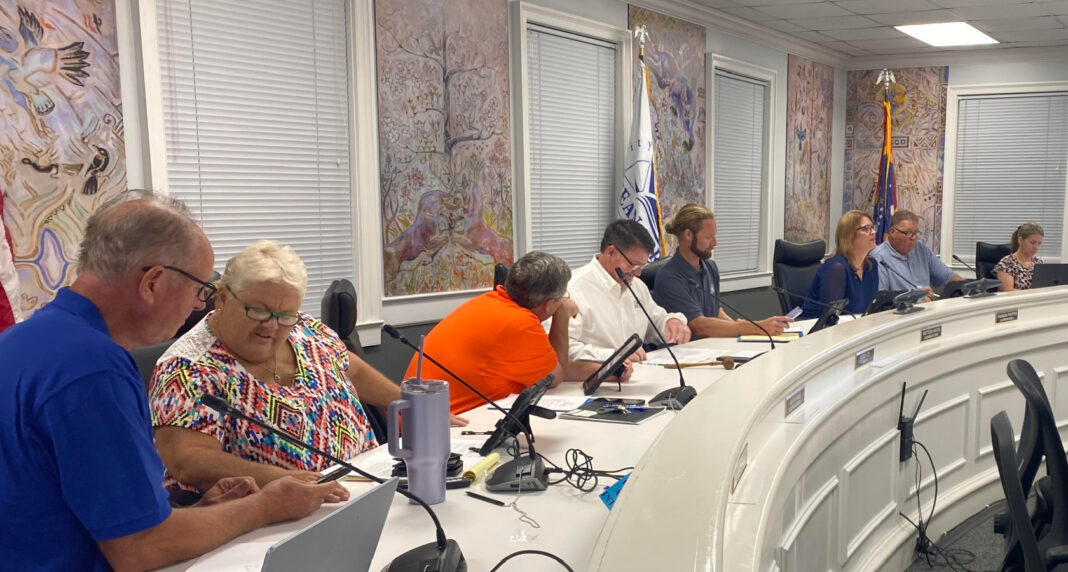
The vote to suspend the RDA came after weeks of mounting tension and concern. Alderman Julie Messenger made the motion, seconded by Alderman-at-Large Matthew Hinton. During discussion, Alderman Rob Blackman asked whether “suspend” meant to eliminate the RDA entirely. Alderman Karen Stennis clarified that the intent was to pause the group’s activities for further review.
What Comes Next?
That review may include a closer look at how the RDA was operating, how much influence it had over funding discussions, and whether it remained aligned with the needs and values of Ocean Springs residents.
For now, the suspension marks a turning point. The city has hit pause on a fast-moving plan that many believed was being steered more by private interests than public input. Whether the RDA returns in a restructured form or is eventually disbanded, one thing is clear: the days of quiet dealmaking behind closed doors are no longer going unchallenged.


If this hotel/convention center is such a fantastic idea, let them fund it. There is absolutely no reason for public money to be used on this crazy idea. What the focus should be on is forcing the owner(s) to clean the site.
Absolutely agree.