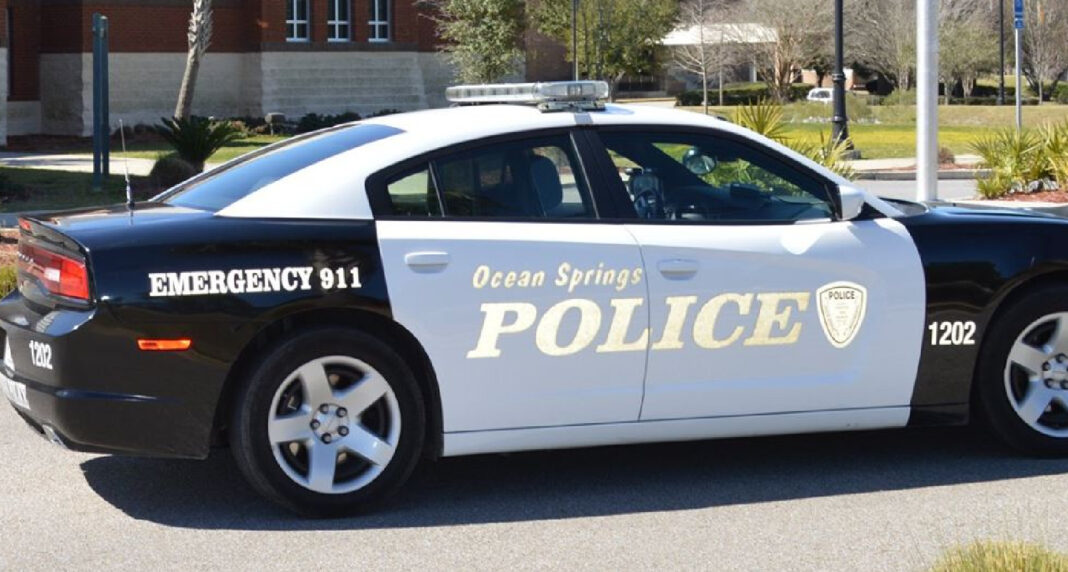
OCEAN SPRINGS, MS (GC WIRE) – Two Mississippi lobbyists who represent several cities signed secret contracts promising them a percentage of traffic ticket revenue if they could convince their municipal clients to adopt the controversial Securix program that used cameras to nab uninsured motorists.
But the contracts came with a caveat – they could never reveal to their city clients that they are personally involved or that they’d be getting a cut – an arrangement critics say disguises a commissioned sales pitch as legal advice.
According to internal emails, attorney Tammra Cascio and consultant Ted Thompson were handpicked for their “close” relationships with a particular state official and for the contracts they held with cities Securix sought to target.
The expansion efforts came as Securix was rolling out the program in Ocean Springs, the first city in Mississippi to deploy the camera-based system designed to detect uninsured vehicles.
The pair are just two of several politically connected figures across the state who signed the “consulting” contracts pushed by Josh Gregory and Robert Wilkinson.
Gregory is an owner of the consulting firm Frontier Strategies. The firm was contracted by Securix and received $36 of every $300 fee paid by uninsured motorists, according to documents provided by the company. Wilkinson was the City Attorney of Ocean Springs who simultaneously represented Securix.
$6 a Ticket, But Keep It Hush-Hush
Cascio is a Jackson-based lobbyist and attorney whose practice focuses on legislative matters. She recently served as president of the Mississippi Bar Foundation for the 2025 term.
State records confirm Cascio was a registered Mississippi lobbyist with the cities of Pascagoula and Gluckstadt listed as her clients at the time she signed the contract with Securix.
Pascagoula and Gluckstadt were two of the three cities listed in the agreement as the municipalities she was tasked with targeting. If any of the three cities signed on, Cascio would receive 4% of the company’s gross revenue from each traffic citation issued, which equated to $6 per paid ticket.
Thompson is a partner at the consulting firm Thompson & Associates, LLC. He officially represented Pearl at the time and had relationships with other cities across the state. His contract included the same $6 per paid citation incentive.
While their roles were to persuade those cities to adopt the Securix program, the agreement prohibited them from disclosing that they would personally profit from each citation issued under the system.
The contracts required each signer to “keep confidential the existence of this agreement and also that they are communicating with the other party.”
Why They Were Handpicked
Internal emails obtained by GC Wire show Cascio and Thompson were specifically targeted by Securix executives because of their political relationships and the cities they represented.
In a January 2022 email discussing strategy for expanding the Securix program, Josh Gregory told colleagues they planned to recruit lobbyists who were “close to” Mississippi Department of Public Safety Commissioner Sean Tindell and had relationships with municipal governments.
Gregory identified Cascio and Thompson as two of the people he wanted to bring into the effort.
“Tammra has been close with Tindell since he was in the State Senate,” Gregory wrote in a follow-up email. “She represents Gluckstadt and Pascagoula which are both good targets for us.”
Secretary of State records listed Cascio as the registered lobbyist for both cities at the time.
In the same email, Gregory wrote Thompson and company represent Pearl, D’Iberville and Diamondhead, are considered “one of the top 3 lobbyist shops in town,” and are “very close with Tindell.”
Over the next several weeks, Cascio exchanged emails with Miller reviewing the agreement and requesting minor edits, including having the contract changed from her personal name to Cascio Consulting LLC.
In March 2022, Cascio returned the document signed.
“Here you go… corrected, initialed, dated and signed,” she wrote in an email to Securix executives.
Thompson sent his signed contract back to the company in April 2022. The City of Pearl adopted the Securix program the following year.
GC Wire spoke with Pearl Ward 1 Alderman Sammy Williams on Monday. When the topic of Securix came up, Williams stated the city is “not doing that anymore.”
Williams said he had no knowledge of the financial arrangement between Thompson and Securix nor did he recognize Thompson’s name. When offered a copy of the contract during the phone call, he declined, stating the city’s legal department handles contract issues.
“All I know is they brought it to us and told us, you know, we need to do this and it looks pretty good for us,” Williams said. “I wasn’t concerned about any money. I just wanted to get people that ain’t got insurance off the roads.”
Internal Disputes Emerge
Emails obtained by GC Wire show that as the Securix program expanded, disputes erupted between the Mississippi operators and executives from the parent company that developed the technology.
In July 2024, Securix chairman Jonathan Miller sent a lengthy email to staff and consultants warning that the way the program was being operated in Mississippi was creating serious legal risks.
Miller wrote that the system was being mismanaged and warned that the actions of the Mississippi partners could expose both the company and participating cities to liability.
“The problems created by mismanagement of the uninsured vehicle system in Mississippi have been massive and can’t continue,” Miller wrote.
He also warned that the program was placing municipalities at risk and accused the Mississippi operators of ignoring contractual obligations and legal requirements tied to the state’s insurance database.
“We can’t afford to violate the law and will not do so,” Miller wrote. “We also will not circumvent DPS.”
The email described a breakdown in the relationship between the companies that jointly operated the program in Mississippi and warned that the dispute could ultimately end up in court.
Consultant Chooses a Side
Cascio was included on the email chain.
Her response made clear she had no intention of engaging with Miller or the Securix executives raising the concerns.
“I will not be engaging with you in this matter; and I will not be working on anything related to this subject going forward unless I am working with Josh Gregory,” Cascio wrote in a July 2024 email.
“There is no reason for you to contact me further.”
A Network of ‘Consultants’
Emails show Cascio and Thompson were not the only politically connected figures offered a share of citation revenue.
Among those who signed similar contracts was Ocean Springs developer Joe Cloyd, who at the time served as president of the Ocean Springs School Board and was described internally as a political ally of local officials. His contract was executed under the name Cloyd and Associates, LLC.
Cloyd’s deal differed from the rest. His territory was listed as Ocean Springs, which was already running the program. Instead of trying to get a city onboard, Cloyd was put in place to “give insurance if things got rough.”
Gregory described Cloyd’s value in an email:
“Joe Cloyd, Ocean Springs – ran Mayor Holloway’s runoff and has been active in most of the council races. Jokingly referred to as the ‘8th councilman.’ Current lobbyist for Ocean Springs and is very involved with Jackson County as well. I told him if Jonathan approves his deal it wouldn’t include the first 6,000 citations (January) that go out. He’s going to give us insurance in Ocean Springs if things get rough after the citations hit and he can represent Ocean Springs interests with the legislature and Tindell.”
Cloyd and Gregory had a previous business relationship with Frontier Gulf Coast LLC, an offshoot of Gregory’s Jackson based Frontier Strategies.
Other who signed on as “consultants” include Jabari O. Edwards Sr, operating through J5 GBL LLC, and Chris Gouras of Gouras & Associates.
The same emails also referenced House Representative Trey Lamar, who helped introduce company representatives to local officials in Senatobia. While Lamar was paid by Securix for legal work related to the program, records show he did not sign the revenue-sharing consultant agreement presented to him.
The Program Ends
Amid lawsuits, public scrutiny and growing political controversy, the Securix program ultimately collapsed in Mississippi.
The system that once promised to spread to cities across the state no longer operates anywhere in Mississippi today. But the fallout continues.
Recent reports have revealed details that question the legality of the program itself – with police officers on the Securix payroll and municipal courts completely left out of the traffic ticket loop.