HATTIESBURG, MS (GC Wire) – Sworn testimony from a municipal court clerk and a corporate representative has revealed new details about a Mississippi traffic ticket operation run by IntelliSafe LLC, a company founded by two former Ocean Springs officials while they were still serving.
The discovery also answers one of the lingering questions surrounding IntelliSafe’s ownership. Court records acquired by GC Wire identify political consultants Josh Gregory and Quinton Dickerson as members of the LLC, making them owners of the company alongside former Ocean Springs City Attorney Robert Wilkinson and former Ocean Springs Police Chief Mark Dunston.
For Ocean Springs residents, those names are hardly new. Gregory, Dickerson, Wilkinson and Dunston were all involved with the city’s controversial Securix traffic enforcement program, which ultimately unraveled amid lawsuits and legal challenges before many of the same individuals resurfaced behind IntelliSafe.
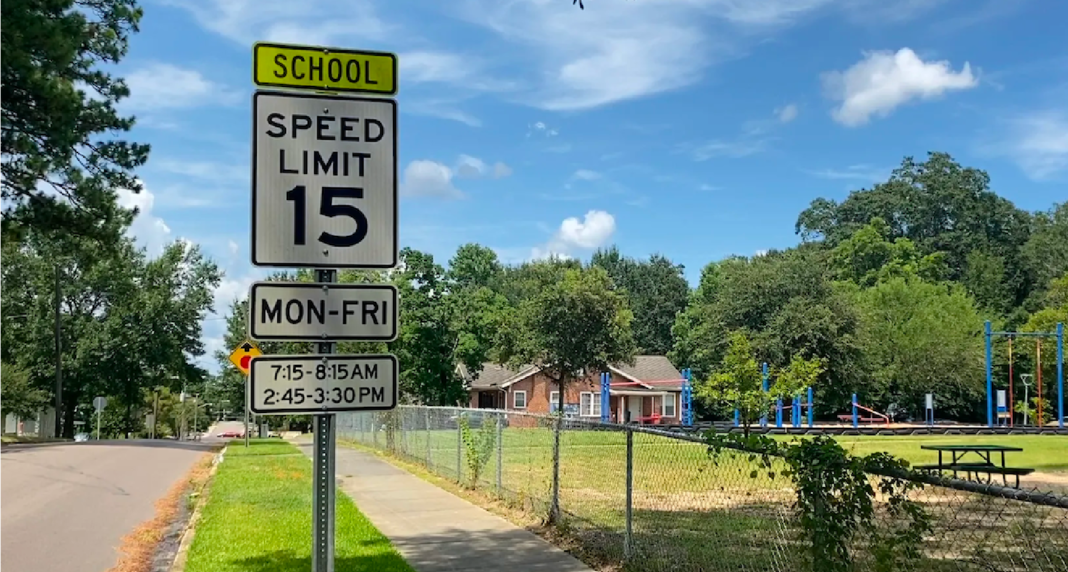
IntelliSafe LLC is a private traffic enforcement company that contracts with municipalities to administer school-zone speeding programs, including processing violations, mailing notices, collecting payments, and conducting diversion programs.
The company has come under increasing scrutiny as lawsuits and sworn testimony have raised questions about the legality of its ticketing process, diversion program, and the division of money collected from what appeared to motorists to be an official court process.
Court Clerk’s Testimony Raises Questions About Court Process
The testimony came during a lawsuit filed by Jacob Stevens and Christopher Puckett against the City of Hattiesburg, Mayor Toby Barker, Police Chief Hardy Sims, IntelliSafe LLC, Robert Wilkinson, Alexander Wilkinson, and others.
The plaintiffs are represented by Hattiesburg attorney Matthew Lawrence, who spent much of the deposition questioning Municipal Court Clerk and Court Administrator Phillip McSwain about how the city’s IntelliSafe program actually functioned.
Lawrence began by comparing the IntelliSafe process to Mississippi’s Uniform Traffic Ticket Law, which requires criminal traffic prosecutions to begin with a sworn affidavit identifying the infraction, the defendant, the issuing officer, the court, and the date the defendant must appear. The plaintiffs contend IntelliSafe’s system operated differently.
McSwain’s testimony described that difference in detail.
He testified that the date printed on IntelliSafe’s mailed notices was not actually a court date. Instead, recipients were directed to meet with IntelliSafe representatives in the courthouse lobby, where no judge was present and no court proceedings were taking place.
These meetings were often conducted by Alexander Wilkinson, son of Robert Wilkinson. GC Wire previously reported Intellisafe personnel would refer to the meetings as “options arraignments.”
McSwain further testified that no municipal court case existed when those notices were mailed. According to his testimony, a case was opened only if a recipient refused to pay the private company. IntelliSafe would then forward a spreadsheet to the Municipal Court, which was reviewed by the city prosecutor before a decision was made to create an official court case.
Company Representative Confirms Automated System
While McSwain’s statements described how the Municipal Court handled IntelliSafe citations, testimony from the company’s own representative shed light on how the system operated behind the scenes.
Joe Payne, designated as IntelliSafe’s corporate representative, testified that many of the functions motorists would likely associate with IntelliSafe were actually performed by another company, Meta Traffic LLC. According to Payne, Meta generated the citation packets, mailed the notices, maintained the video and image databases, operated the customer call center, and handled payment processing through third-party vendors.
Perhaps the most significant admission came when Payne confirmed the system was automated. For more than a year, IntelliSafe and other defendants argued the system was not an automated traffic enforcement system. Payne’s testimony and the company’s supplemental discovery responses now state that “the system is automated and requires little, if any, day-to-day implementation.”
The testimony also expanded on Robert Wilkinson’s involvement in the program. Discovery includes emails showing Wilkinson communicating with city officials regarding the contract, discussing the rollout of the program, and forwarding draft municipal court orders that he wrote “need to be entered by the Municipal Judge.”
Questions Over Where the Money Went
Payne’s testimony also sheds new light on one of the questions GC Wire first raised months ago: what happened to the $25 payment that IntelliSafe’s contract required be sent to the Mississippi Department of Public Safety (DPS) for every paid diversion citation.
Earlier this year, GC Wire submitted a Public Records Act request to the agency seeking records showing those payments had been received. In its response, DPS stated, “After a diligent search, we could locate no records responsive to your request where the Mississippi Department of Public Safety has received payments.”
Internal emails acquired by GC Wire further complicate the issue.
Emails from IntelliSafe principal Josh Gregory to Hattiesburg officials, along with the company’s monthly accounting reports, repeatedly reference and calculate payments designated for the Mississippi Department of Public Safety, consistent with the language of the city’s contract. Monthly reports produced in discovery include a separate “Total DPS” line item showing thousands of dollars allocated to the Department of Public Safety.
In an October 2024 email, Gregory sends Hattiesburg Chief Administrative Office Ann Jones a breakdown of the previous month’s payments. “Ann, the check for September is being mailed today,” he wrote. “I have attached the billing details.”
Attached to the email was IntelliSafe’s September 2024 payment summary, which listed “Total City: $40,502.62” and “Total DPS: $13,500.54.”
Those documents appear difficult to reconcile with the DPS response to GC Wire’s records request and Payne’s sworn testimony. During his deposition, IntelliSafe’s corporate representative testified that no money was actually paid to DPS.
According to Payne, the $25 payments did not go to DPS as specified in the contract. Instead, Payne testified the money was ultimately directed to a non-profit organization called Mississippi Public Safety Foundation. He further testified that political consultant Josh Gregory handled discussions with DPS Commissioner Sean Tindell regarding that arrangement.
GC Wire reviewed 11 monthly billing statements sent by Gregory to city officials between October 2024 and August 2025. None of them contained any references to sending money to the Mississippi Public Safety Foundation. Attorney Lawrence told GC Wire Intellisafe handed over $78,532 to the non-profit.
DPS Commissioner Tindell was unavailable for deposition but did submit a sworn affidavit that Lawrence intends to introduce prior to next week’s hearing. Lawrence declined to discuss the affidavit in detail because it has not yet been filed with the court, but said he believes it contains important information relevant to IntelliSafe’s handling of the payments.
Lawrence also told GC Wire he does not believe Commissioner Tindell did anything wrong based on the information currently available.
Same Names, Different Ticketing Venture
The Hattiesburg litigation also shines new light on a familiar cast of characters. Many of the same individuals identified throughout the IntelliSafe litigation were previously involved in the Securix and Securix Mississippi uninsured motorist enforcement programs, which eventually collapsed under widespread scrutiny.
Some of the cities involved in those programs, including Biloxi, also had contracts stating the private company would send a portion of all paid citations to DPS. However, like in the case of Hattiesburg, DPS responded to a records request stating they never received a dime.
The City of Ocean Springs still holds nearly a half million dollars in fees collected from motorists during its short operation of the Securix program. City officials have not publicly announced what they intend to do with those funds.
As sworn testimony and internal company records continue to emerge in the IntelliSafe case, many of the same people who helped build Ocean Springs’ traffic enforcement program are once again finding their decisions placed under a microscope.
For Ocean Springs residents who watched the rise and fall of Securix, the discovery offers an unprecedented look inside the operations of another traffic enforcement company built by many of the same people.