

While communities nationwide cancel surveillance contracts over data misuse and privacy flaws, Ocean Springs quietly cuts a new check to maintain its invasive tracking grid.
OCEAN SPRINGS, MS (GC Wire) – A recent review of the Ocean Springs docket of claims shows the city has quietly continued its relationship with Flock Safety, a company now facing growing scrutiny nationwide over its expanding surveillance technology. Earlier this year, aldermen approved a $21,000 payment for continued access to the company’s artificial intelligence driven operating system.
That payment is noteworthy because Ocean Springs officials spent much time publicly attacking reporting that first revealed the extent of the city’s investment in the platform.
In December of 2024, this reporter partnered with the Ocean Springs Weekly Record to publish an expose documenting how the Board of Aldermen approved the purchase of an AI-powered operating system capable of tracking, recording, searching, and sharing information about people and vehicles traveling through certain parts of town.
Since sounding the alarm locally, cities across the country have been rethinking – and often canceling – their contracts with the controversial Atlanta, Georgia based Flock.
But, here in Ocean Springs, the relationship quietly continues.
How Ocean Springs Contracted with Flock
There was no public debate or prior notification that the city was contemplating use of the controversial system.
In 2024, a $55,000 Flock contract appeared in the consent agenda, a portion of a public board meeting designed to approve ordinary day-to-day business items all at once.
But this was no ordinary business item.
It was the approval of an expensive operating system that allowed officials to use Flock license plate readers already owned by the city to search historical vehicle movements and share that information through Flock’s local, statewide, and national information-sharing networks. The purchase also included additional camera technology capable of functions beyond traditional license plate recognition.
The response to our reporting from city officials was swift.
Former Police Chief Ryan LeMaire told Board members the article published in the Weekly Record was “100% not true” and high-fived a staff member as he left the podium. He later told WLOX there was “no AI technology” involved in the system. Those claims were contradicted by Flock’s own marketing materials, technical documentation, and the very contract approved by the city.
The denials were not limited to the police department.
Public officials repeatedly attempted to reassure residents that concerns about the system were overblown. Critics of the reporting at City Hall suggested the technology was little more than a modern tool for “keeping things safe.”
Yet the documents told a different story.
Flock itself described the product sold to Ocean Springs as a “public safety operating system” designed to collect visual, audio, and situational evidence across an entire city.
The agreement gave Ocean Springs access to a software platform that could search historical vehicle movements, identify vehicles by characteristics beyond license plates, and participate in extensive information and data sharing networks. The city’s existing Flock license plate reading cameras integrated with the system.
The contract included eight free Flock Condor PTZ cameras and access to Flock’s broader online ecosystem.
Since the contract was approved, Flock has expanded the capabilities of the Condor cameras. Company training materials reviewed by multiple news organizations now demonstrate the Condor’s ability to identify and follow human movement across connected camera systems.
As questions mounted, city officials minimized the significance and often denied the existence of the AI powered tracking capabilities.
That downplay matters today because many of the same capabilities once dismissed as routine are now at the center of a nationwide debate over privacy, data retention, information sharing, and government surveillance.
Last week, WLOX published another article on the topic titled, “Flock says its cameras don’t track people. Its training videos say otherwise.”
Nearly two years after we raised concerns in Ocean Springs, communities across America are now demanding their own officials abandon the program.
What was dismissed in Ocean Springs as alarmist reporting has now become the subject of national investigations.
Questions Once Dismissed in Ocean Springs Now Surface Nationwide
Since the reports in the Weekly Record and GC Wire were published in 2024, major news organizations, civil liberties organizations, local governments, and courts have increasingly scrutinized Flock Safety and the rapidly expanding surveillance network built around its products.
The concerns raised nationally are strikingly familiar: how long vehicle-location data is retained, who can access it, how broadly it is shared between agencies, whether artificial intelligence is being used to identify people and vehicles, and what safeguards exist to prevent abuse.
Many municipalities have reconsidered or terminated their relationships with Flock after residents demanded greater transparency regarding how the systems operate and who can access the information they collect.
Grassroots organizations such as DeFlock have emerged specifically to challenge the expansion of automated surveillance networks in local communities. Civil liberties advocates argue that systems originally marketed as tools for locating stolen vehicles have evolved into sophisticated databases capable of reconstructing a person’s movements over time.
In 2025, Flock announced during a Super Bowl ad a partnership with Amazon’s Ring security systems. The announcement drew significant backlash from privacy advocates and consumers concerned about integrating residential camera networks into nationwide human and vehicle tracking systems. The partnership plan was later abandoned.
Data Sharing Beyond Local Boundaries
One of the most controversial aspects of the technology involves data sharing.
While local officials often describe the systems as local crime-fighting tools, critics point out that Flock’s value comes largely from its ability to connect agencies together through a common platform.
In several communities, public records requests and audits revealed that agencies outside the jurisdiction — including federal agencies and out-of-state law enforcement entities — had access to local license plate data.
In Mountain View, California, a municipal audit revealed that outside agencies had been searching locally collected data without the level of public understanding city leaders believed existed. The controversy ultimately led city officials to shut down the program and prompted a public apology from police leadership.
Similar controversies have surfaced in other communities, where concerns about data-sharing practices have led elected officials to reconsider their participation in the network.
Last year, a cybersecurity flaw was found by researchers which allowed anyone with an Internet connection to access live camera feeds and other data from the Flock Condor line, the same human tracking cameras used by Ocean Springs.
Litigation and Constitutional Challenges
The technology has also become the subject of significant litigation.
Multiple lawsuits filed around the country challenge whether mass collection and retention of vehicle-location data is consistent with constitutional privacy protections. Civil liberties organizations argue that persistent location tracking can reveal intimate details about a person’s life, including where they work, worship, seek medical treatment, or spend their personal time.
Supporters of the technology counter that license plates are visible to the public and that the systems provide valuable investigative leads that help solve crimes.
Regardless of where one falls on that debate, the issue has clearly moved beyond a disagreement among a handful of residents in Ocean Springs.
The Debate Returns to Ocean Springs
The most remarkable aspect of the national controversy may be how closely it mirrors the questions raised in our reporting when Ocean Springs approved its Flock contract in 2024.
We questioned the scope of the system.
We questioned how information would be shared.
We questioned how artificial intelligence would be used.
We questioned what safeguards existed against abuse.
Rather than openly addressing those concerns, many public officials chose to attack the reporting itself.
Today, those same questions are being asked in city halls, courtrooms, newsrooms, and legislative chambers across the United States.
And while the national debate continues, Ocean Springs recently approved another $21,000 payment to continue using the very operating system we sounded the alarm on two years ago.
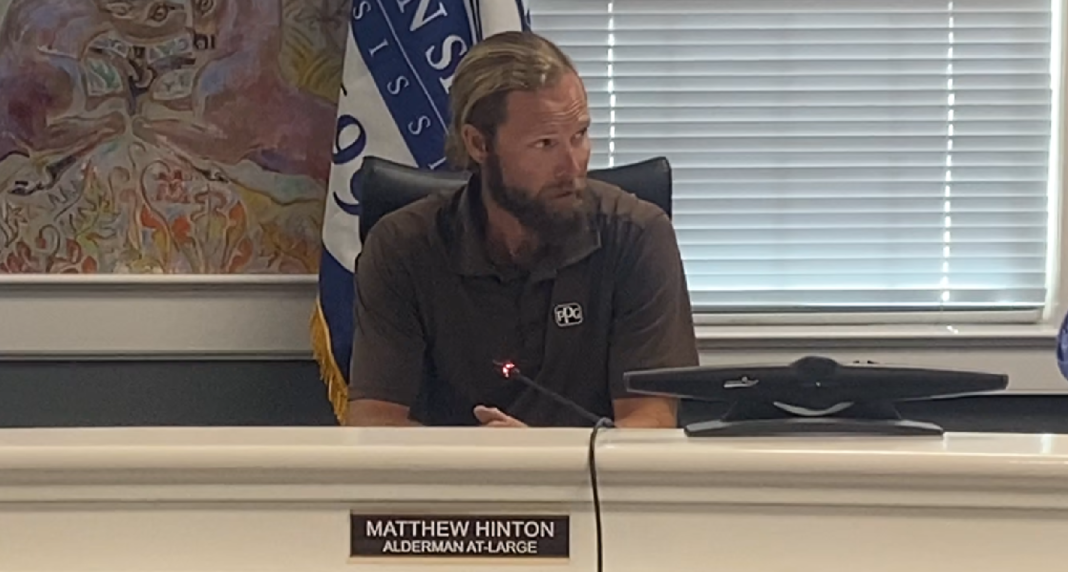


To what end is this covert collection of citizens data going to cease? What will persuade the Council (Aldermen) to stop their paranoid behavior?