
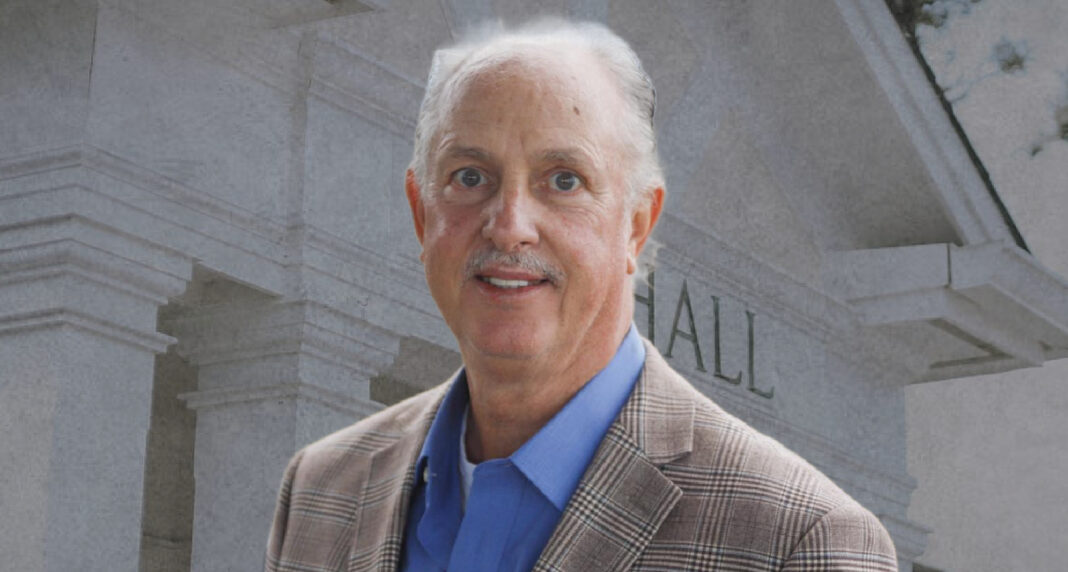
OCEAN SPRINGS, MS (GC Wire) – Ocean Springs Alderman Steve Tillis says concerns over investigations, legal fallout, and taxpayer expense were major reasons he voted against correcting disputed official records tied to the City’s $8 million downtown parking garage project.
Last Tuesday, Tillis voted against restoring the original agreements approved by the Board in 2022 to the City’s official historical record.
The controversy centers on grant agreements tied to the City’s publicly funded downtown parking garage project.
Newly obtained transcripts and document comparisons published by GC Wire indicate the Board approved one set of agreements in May 2022, but the official minutes now contain later “Amended and Restated” agreements created more than a year afterward.
GC Wire’s review found the current exhibit attached to the official record combines pages from both versions — suggesting the original agreements approved by the Board were later swapped out.
Critics argue the approved agreements point to the $8 million publicly funded structure being owned by taxpayers, while the unapproved replacements in the record show the garage being owned by a private company and leased to the City.
Last Tuesday, Alderman Karen Stennis made a motion to correct the record back to its original reflection of what the Board’s actions were on the night in question.
Tillis, who represents Ward 1, voted no.
Why He Voted Not to Fix the Record
Following last week’s Board vote rejecting a motion to restore original grant agreements to the official minutes, GC Wire contacted aldermen who voted against the measure seeking explanations for their vote.
Tillis was the only one to provide a response.
“I have reviewed the information and audio recording you published,” he wrote.
In his statement, he did not dispute the transcript, the executed 2022 agreements, or the side-by-side exhibit comparisons published by GC Wire showing the current official exhibit contains pages from a later 2023 amended agreement.
Instead, Tillis repeatedly focused on the consequences that could follow if the record were officially corrected.
“This could have involved hiring outside counsel and investigators, with the investigation potentially extending from Ocean Springs to the state level,” Tillis wrote.
He also warned a “full investigation” could cost taxpayers significantly.
“In addition, a full investigation could potentially cost taxpayers upward of $100,000,” Tillis stated.
The comments are significant because newly obtained transcripts and document comparisons published by GC Wire indicate the Board approved one set of agreements in May 2022, while the official record now contains later “Amended and Restated” agreements created more than a year afterward.
Tillis Reviewed the Documents Before the Vote
Days before the vote, Tillis was personally shown the disputed agreements, the timeline of events, and the side-by-side exhibit comparisons later published by GC Wire.
During a roughly hour-long meeting, the documents were reviewed one-by-one, including the original 2022 agreements, the later amended versions, and the current exhibit attached to the official minutes.
Later that day, Tillis sent a text message stating, “I heard what you had to say loud and clear.”
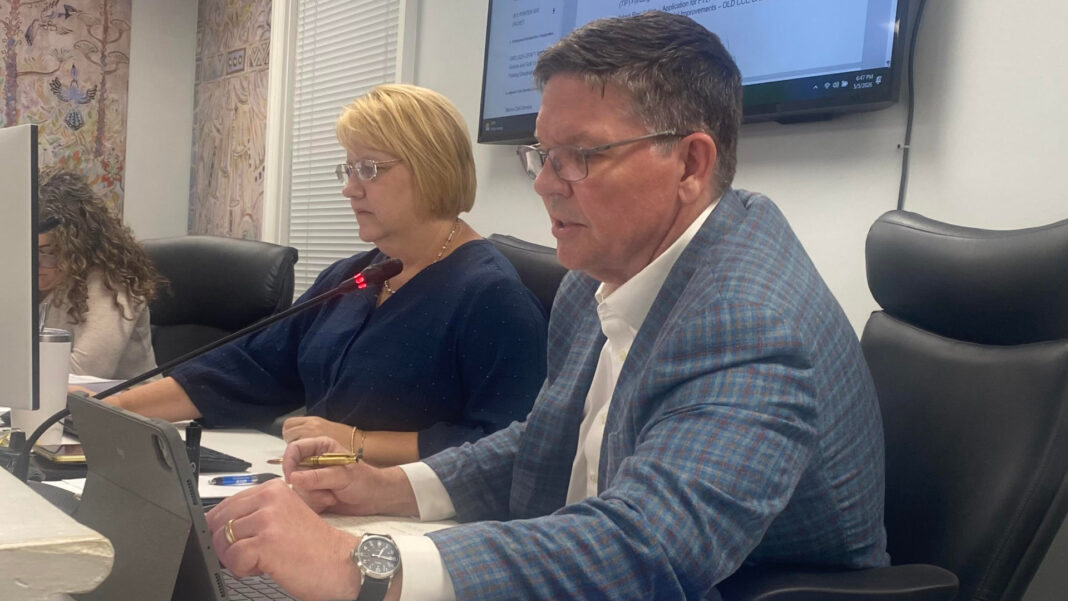
But during last Tuesday’s Board meeting — after Alderman Karen Stennis delivered a lengthy presentation explaining why the current minutes no longer reflect the agreements approved in 2022 — Tillis interrupted and asked:
“My head is spinning. Are we talking about the 1515 parking garage?”
The exchange drew attention because Tillis had already reviewed the disputed records in detail prior to the board meeting and before GC Wire publicly released its evidence.
The ‘Collateral Attack’ Argument
In his Sunday response, Tillis also said he relied on legal guidance from City Attorney David Harris, who argued during the meeting that correcting the minutes could amount to an improper “collateral attack” on actions taken by a previous Board.
“Based on guidance from the City Attorney and conversations with outside counsel, I had concerns that attempting to change records or minutes from a previous board could create additional legal issues and taxpayer expense for the City,” Tillis wrote.
But the evidence presented by Stennis and published by GC Wire raises a different issue entirely.
The dispute is not over making a collateral attack or, in other words, changing what the May 2022 Board approved. It is over whether the current official record accurately reflects what that Board already approved at the time — the complete opposite of a collateral attack.
The transcript of the night in question shows officials repeatedly discussing and approving a specific “Grant Agreement” before them that night. The executed versions of those agreements were later signed and notarized by all parties in August 2022.
Yet the exhibit currently attached to the official minutes now contains pages from a differently titled “Amended and Restated Grant Agreement” created in July 2023.
GC Wire’s side-by-side review found the current exhibit combines the cover page from the original 2022 agreement with substantive pages from the later amended version.
In other words, the proposed correction before the Board last week was not to rewrite history, but to restore the original agreements the evidence indicates were already part of the official record.
‘I Do Not Believe the Outcome Would Change’
Tillis also stated he did not believe correcting the record would ultimately change whether the parking garage ends up publicly owned or leased from a private developer.
“Honestly, I do not believe the final outcome regarding the lease versus ownership issue would change,” he wrote. “The MDA has stated this is a lease arrangement and not ownership, and that the City needs to sign a lease by June 30 or potentially face paying back millions of dollars.”
But the differences between the 2022 agreements and the later replaced versions are not minor. And MDA’s directive is based on their belief the later agreements are the versions approved by the City.
They are not. City records confirm versions currently relied upon by MDA were never approved by the Board.
Last Tuesday’s vote ensured that MDA continues to not be informed of which versions of the contracts were actually approved by the governing body.
The agreements approved and executed in 2022 were tied to certified grant applications submitted to the State by the City and OHOS Development LLC describing the project as one in which the parking garage would ultimately be publicly owned by the City.
Under the terms of the agreements, the parties certified those material facts were “true and correct.”
Those certified statements included:
“OHOS Land, LLC has entered into an agreement in which it will transfer ownership of the parking garage and amenities to the City upon completing construction.”
The unapproved versions of the contracts erroneously added to the historical record include a clause that points to OHOS owning the structure. That clause does not appear in the original approved documents.
But regardless of whether the ultimate ownership structure ever changes, the central issue before the Board last week was not future negotiations or political practicality.
It was whether the official record accurately reflects what the Board actually approved in May 2022.
And according to the newly obtained transcript, executed agreements, and side-by-side exhibit comparisons published by GC Wire, the current record no longer does.
A Pattern of Problems
The swapped out agreements are not the only controversy surrounding the parking garage project.
Last October, city officials were confronted with another disputed document tied to the garage deal after a memorandum presented to the Board was found to be a forgery, containing language that did not appear in the original version. Yet, the City Attorney used the faulty language to construct a proposed lease agreement that would have cost the City tens of thousands of dollars a year, based on the added verbiage.
The discrepancy was later admitted by the City Attorney in a confidential memo to aldermen.
The City has also faced repeated questions over why original executed grant agreements previously produced through public records requests later disappeared from the official record.
Identical public records requests now result in contract versions created more than a year after the originals that were previously supplied in response to public requests.
The Real Concern
At its core, the controversy is no longer simply about parking garages, lease structures, or grant language.
It is about whether official government records should accurately reflect what elected officials actually approved.
Tillis’s explanation made clear he believed correcting the record could trigger investigations, legal expense, political fallout, and difficult questions for the City.
What his statement did not explain is why concerns about those consequences should outweigh maintaining an accurate historical record.
Because if city officials are willing to leave disputed records unchanged to avoid potential fallout in a matter involving $8 million in public funding, residents are left with a larger question:
What else might remain buried simply because correcting it would be inconvenient?


It’s time to put a stop to this baloney….it needs to be taken out of the hands of the local officials, investigated by someone who has absolutely no horse in the race and lets get it settled…how the heck that alderman would vote that way so the rest of the story is not brought to light…BS…they know it and we know it….someone needs to find their Sears and Roebuck brass balls…