
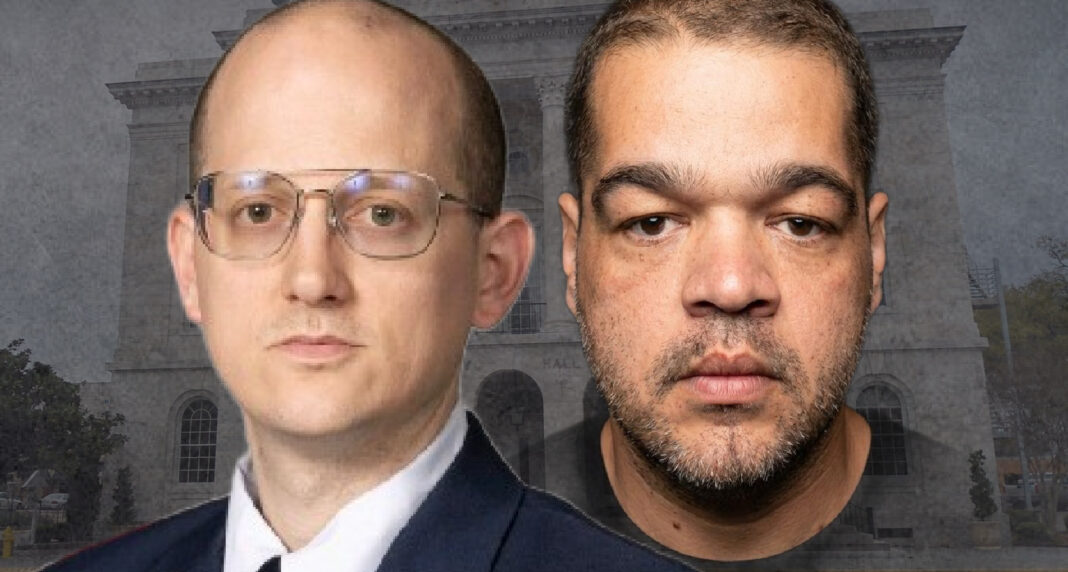
BILOXI, MS (GC Wire) — Court affidavits obtained by GC Wire show that criminal charges filed against two Biloxi government critics stem from an online article about a Biloxi city employee — and a social media post sharing it.
The documents identify the complainant and alleged victim as Tara Busby Ramage, a Code Enforcement Administrator for the City of Biloxi.
According to the affidavits, Yuri Petrini authored the article, published on PeopleVsBiloxi.com, while Jarrod Fusco is accused not of writing the article, but of sharing a link to it on his Facebook page, Biloxi Politics Uncensored.
GC Wire is the first news outlet to publish the full affidavits and supporting exhibits underlying the arrests of Petrini and Fusco, including screenshots of the article and social media posts referenced in the criminal complaints. Readers can review the documents in full below.
Complaint Against Fusco | Complaint Against Petrini
What Petrini Is Accused Of
The affidavit against Petrini alleges he authored and published an article on PeopleVsBiloxi.com containing “lewd, lascivious, indecent, and profoundly abusive language” directed at Tara Busby Ramage.
According to the filing, the article used “degrading sexualized imagery and misogynistic slurs” and portrayed the city employee “as morally corrupt, sexually promiscuous, and professionally illegitimate.”
The affidavit specifically references language allegedly describing Busby Ramage as a “whore-looking tramp” and “municipal mattress.”
The filing further alleges Petrini published the material “with the intent to harass, intimidate, threaten, and emotionally distress” the complainant.
What Fusco Is Accused Of
Unlike Petrini, the affidavit against Jarrod Fusco does not accuse him of writing the article. Instead, it alleges Fusco used his Facebook page, Biloxi Politics Uncensored, to share and promote it.
According to the affidavit, Fusco “actively distributed and promoted” the article and helped “amplify its degrading and threatening message.”
The filing further alleges Fusco reposted the material “for the purpose of amplifying, distributing, and weaponizing electronic communications intended to harass, intimidate, degrade, and emotionally distress” the complainant.
The affidavit also accuses Fusco of participating in a coordinated effort to “maximize public humiliation, reputational destruction, and emotional harm.”
The distinction is significant because the affidavit does not allege Fusco authored the statements at issue — only that he shared and commented on material written by another person.
Every day, millions of people share links to articles, commentary, investigative reports, and political opinions across social media platforms. In this case, that same act — sharing a link to an article — resulted in a criminal charge.
Arrest, Jail, and Release
The Biloxi Police Department previously confirmed both men were charged with obscene electronic communications.
Each was booked, held on a $1,000 bond, and transferred to the Harrison County Adult Detention Center before later being released.
Fusco told GC Wire the two turned themselves in after receiving calls informing them that warrants had been issued.
“At the time, we didn’t even know what the charges were,” Fusco said.
He said neither man was questioned and that they were not initially told what specific conduct led to the charges.
The article referenced in the affidavits has since been removed from PeopleVsBiloxi.com. Petrini said the decision followed private message threats related to its publication.
Petrini Files Motion Alleging Constitutional Violations
Following his arrest, Petrini filed a motion in Biloxi Municipal Court challenging the prosecution and alleging constitutional and procedural violations.
The filing was submitted prior to the affidavits being provided to him. Those documents have since been obtained by both defendants and reviewed by GC Wire.
In the motion, Petrini argues the case centers on protected speech and challenges the use of a criminal statute in response to published commentary about a public official.
“The substantive predicate of the entire criminal prosecution,” the motion states, is “one instance of using the word ‘whore’ in published journalism about a public official.”
The filing further alleges the prosecution was used as leverage to force removal of online content and describes the case as “a fabricated proceeding, deployed for the purpose disclosed in the same correspondence — to extract content removal under threat of process.”
Petrini also alleges that a third party contacted him after his arrest, referenced details from the affidavit, and tied the criminal case to demands that articles be removed from his website.
According to the filing, the individual described the charge as one that “fails vs 1st amendment” and stated the case “cant proceed without her statement.”
Order Restricts Online Discussion
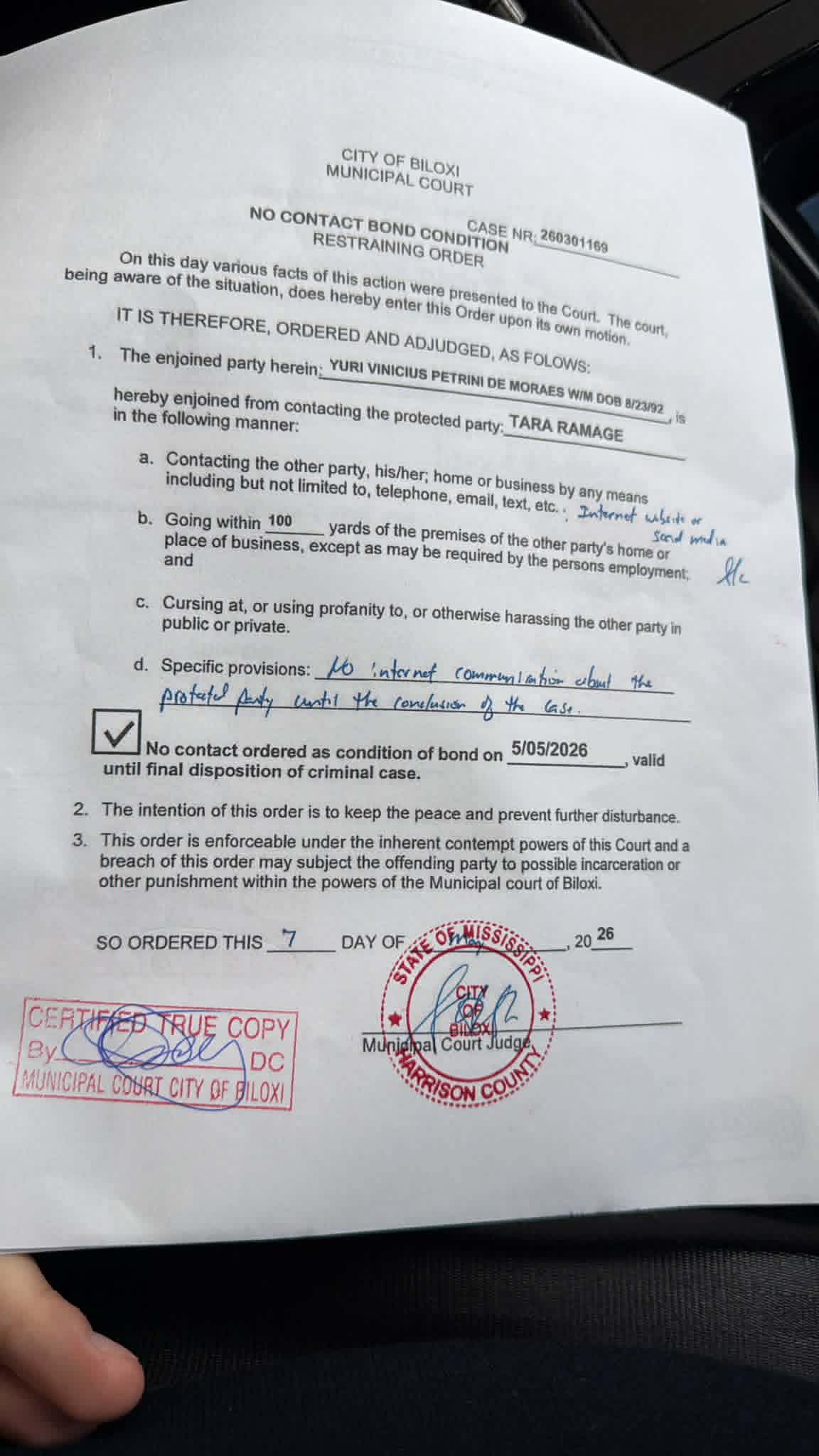
The case escalated further when Petrini received a no-contact bond order containing handwritten restrictions on future internet speech.
In addition to prohibiting direct contact with the complainant, the order states:
“No internet communication about the protected party until the conclusion of the case.”
The document also references “internet website or social media” in connection with the restriction.
The broad wording appears to prohibit Petrini from publicly discussing the complainant online while the criminal case remains pending. Fusco said he was informed the same restrictions apply to him when he received the paperwork on Thursday.
Prior Restraint Concerns
The restriction immediately raised concerns about prior restraint, the legal concept involving government restrictions on speech before it occurs.
Unlike punishment after publication, prior restraints are considered one of the most serious forms of speech restriction under First Amendment jurisprudence and are subject to intense constitutional scrutiny.
The order also echoes the recent controversy involving Ocean Springs mother Heather Wyatt, where a Jackson County court order restricting online speech sparked national backlash before ultimately being rescinded.
That case drew criticism from journalists, constitutional attorneys, and free speech advocates who argued the government cannot broadly prohibit future speech about matters of public concern.
The arrest warrants and bond orders were signed by d’Iberville Municipal Court Judge Scott H. Lusk, who was brought in after all Biloxi municipal judges recused themselves.
Claims That Remain at Issue
Petrini’s motion raises additional concerns related to the prosecution.
These include:
- the use of a criminal statute in response to published content
- the application of a conspiracy allegation tied to distribution of that content
- the setting of a $1,000 bond despite a $500 maximum statutory fine
- and the scope of the court’s internet communication restriction
The motion also alleges Petrini was subjected to repeated handcuffing, transport to county jail, invasive intake procedures, and denial of medication accommodations despite disclosing a disability.
Petrini is asking the court to review the conditions imposed in the case and clarify the limits of the order.
Criminal Charge Instead of Civil Dispute
The affidavits focus on statements made in a published article about a city employee.
Disputes involving allegedly false or damaging statements are typically addressed through civil defamation claims, where the claims are tested in court.
In this case, the matter was pursued as a criminal charge — resulting in arrest warrants for both the author of the article and the individual who shared it.
A Chilling Effect on Online Speech
At its core, the case turns on two actions: publishing an article and sharing it.
The affidavit against Fusco does not allege direct communication with the complainant. Instead, it centers on his decision to repost and comment on material written by another person.
That distinction carries broader implications.
Every day, individuals share links to news articles, opinion pieces, investigative reports, and political opinions across social media platforms. In this case, that same act—sharing a link to an article—resulted in a criminal charge.
The affidavits frame Fusco’s post as “amplifying” the article. But amplification—sharing, reposting, and commentary—is a basic function of modern communication.
Now, the court order appears to go even further, restricting future online discussion about the complainant while the criminal case remains active.
If those actions can trigger criminal liability — or restrictions on future speech — the implications extend far beyond a single case.
The result is a potential chilling effect, where individuals may hesitate to publish, share, or discuss information about public officials out of fear that doing so could lead to arrest or court-imposed speech restrictions.
Fusco Calls Arrest Retaliation for Political Speech
In a statement released after his arrest, Fusco described the prosecution as retaliation for his work as a political commentator and citizen journalist.
“For years, I have investigated and reported on matters involving public officials, city government, zoning controversies, taxpayer spending, political favoritism, and issues affecting the citizens of Biloxi, Mississippi,” Fusco wrote.
“My reporting has been aggressive, unapologetic, and often uncomfortable for people in positions of power,” he continued, “but journalism and political speech were never meant to exist only when convenient for government officials or politically connected individuals.”
Fusco also framed the case as one with implications extending beyond the two defendants.
“The outcome has the potential to affect political commentary, satire, investigative reporting, citizen journalism, and the ability of ordinary citizens to openly criticize public officials without fear of criminal prosecution or retaliation,” he wrote.
Fusco denied committing any crime and said he intends to challenge the charge in court.
“I will not allow protected speech and political criticism to be falsely twisted into criminal conduct,” he wrote.
May 11 Arraignment
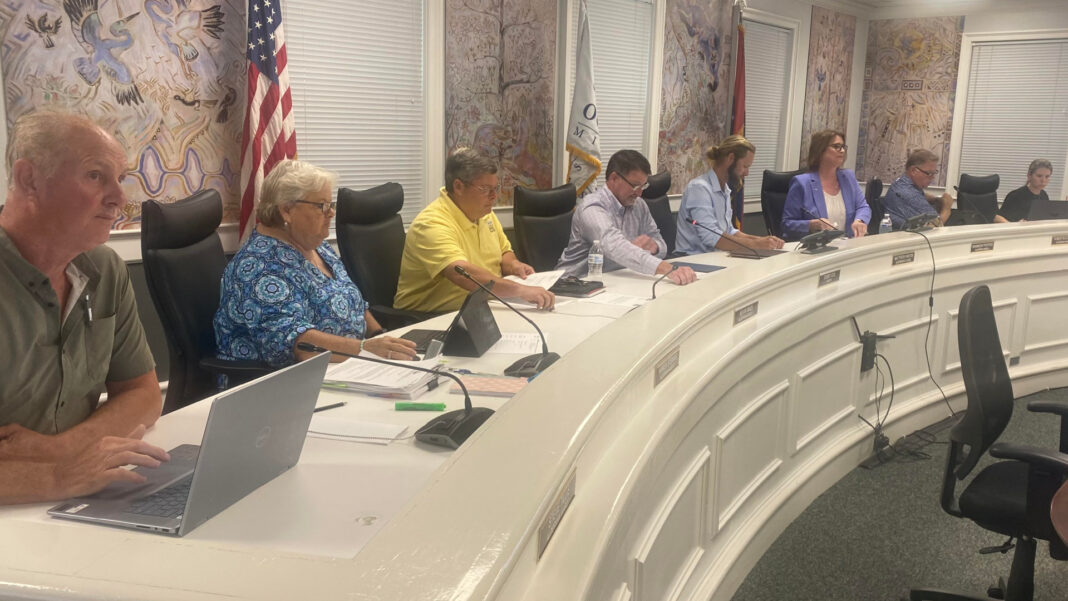
The case is expected to proceed in Biloxi Municipal Court, where Petrini’s motion is now part of the record.
GC Wire has requested comment from city officials regarding both the charges and the court’s restriction on internet communication.
The question now facing the court is not just what was said — but whether publishing it, sharing it, or discussing it online can be treated as a crime.
Both men are scheduled for arraignment on May 11 in Biloxi Municipal Court.

Save the obfuscation here. The words describing her clearly went too far and in no way can be considered “free speech”. Republishing is just as guilty. This got waaaay too personal.
Who decides what is too far? Some might say the First Amendment was created largely to protect speech most find disgusting.